
What to Expect During Pool Excavation in Florida
The fastest, loudest, and most disruptive stage — and the one where surprise costs appear.
Pool excavation in Florida is the stage where the project stops being drawings and becomes a very large hole in your garden, usually within a day or two. It is fast, loud, and the most physically disruptive part of the build.
It is also where the two most common Southwest Florida surprises appear — limestone and groundwater — and where change orders most often arrive. Understanding both before the machines turn up is the best protection you have.
Access, Marking, and Preparation
Excavation needs machinery in your backyard. That means an access route wide enough for a compact excavator or bobcat, and sometimes for a full-size machine. Fence panels are commonly removed and reinstated, and where access is genuinely impossible, material has to be moved by smaller equipment at considerably higher cost.
Underground utilities must be located and marked before any digging. This is a legal requirement and it is handled through Florida's free 811 utility locating service, which should be arranged before excavation. Confirm with your builder that it has been done.
Irrigation lines are a separate issue and are generally not covered by utility marking. Sprinkler systems in the work area are routinely damaged during excavation. Discuss in advance who is responsible for capping, rerouting, and reinstating them — this is a common and avoidable dispute.
Anything you want to keep should be moved: plants worth saving, garden structures, and anything on the access route. Once the machine arrives, whatever is in the way is in the way.
Limestone, Groundwater, and Spoil
Limestone. Across much of Cape Coral and parts of the wider region, a limestone shelf sits under the sand. Hitting it means breaking through with heavier equipment and more time, which costs money. Depth varies lot to lot, sometimes within a single street, so it cannot always be predicted precisely — but an experienced local builder should raise the possibility upfront and say how it is priced if encountered. If your contract is silent on it, ask before signing.
Groundwater. With a high water table, an excavation can start filling with water. Dewatering — pumping the hole to keep it workable — is standard practice in parts of Southwest Florida, and it is another item worth confirming is either included or priced.
Spoil removal. A pool excavation produces a very large volume of material, considerably more than most homeowners picture, because soil expands once dug. Confirm whether removal is included in your contract and where the material goes. Some projects use spoil to regrade elsewhere on the property, which can save money but needs agreeing in advance rather than being discovered as a mound in your garden.
What Happens Next and How It Looks
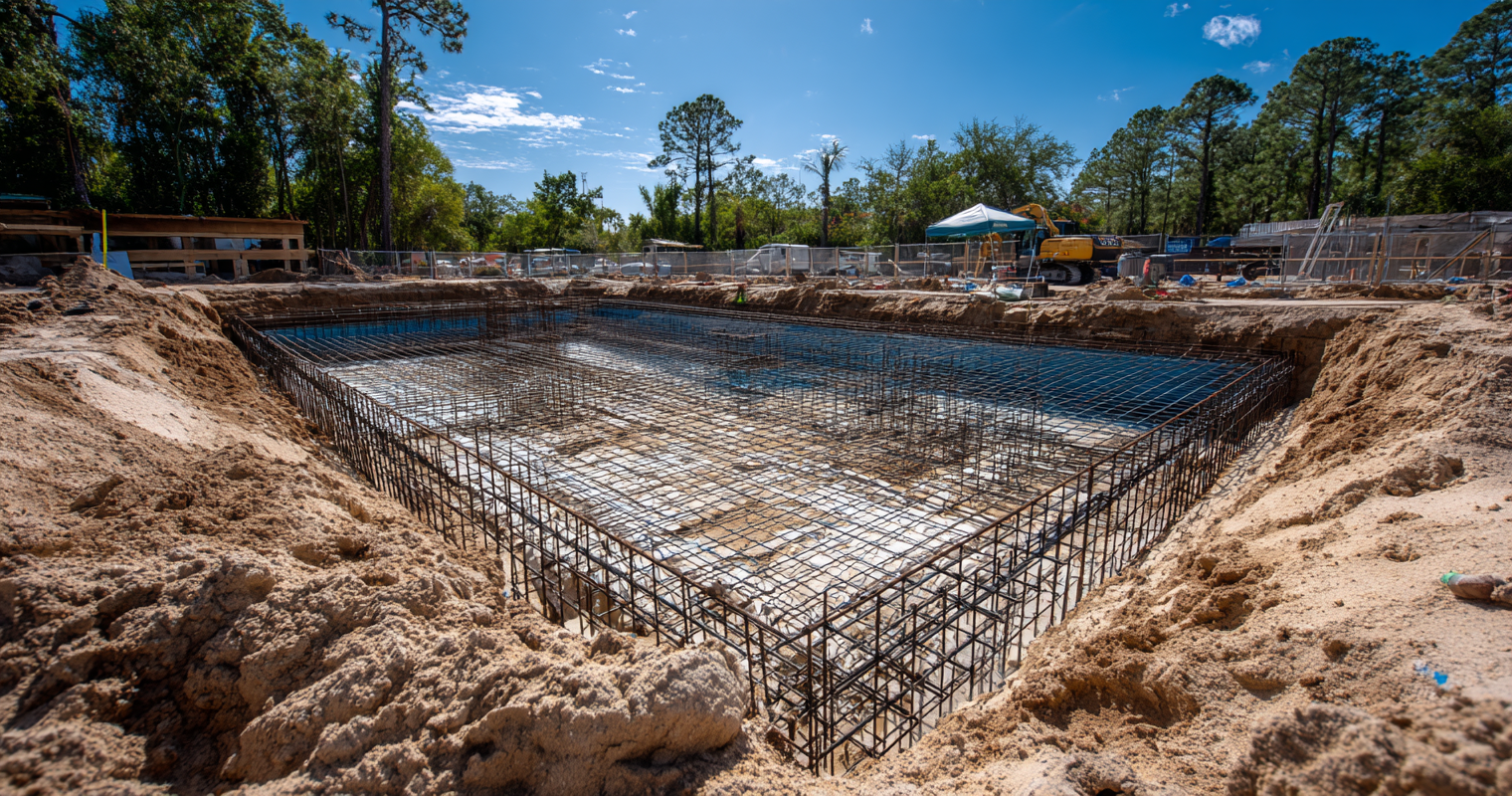
Excavation itself is typically one to two days for a standard pool, assuming no significant obstruction. What follows immediately is steel: a rebar cage tied to the shape of the pool, which goes in quickly and is one of the more visually satisfying stages.
Plumbing and electrical rough-in follow, then inspections that must pass before the shell can be sprayed. Between excavation and gunite there is usually a stretch of waiting driven by inspection scheduling rather than crew availability.
Be prepared for how the site looks during this period. The yard will be torn up well beyond the pool outline, there will be equipment and material stored, and if rain arrives the hole becomes muddy and may partially fill. This is normal and not a sign of a problem.
Expect the open excavation to be secured. An open hole in a residential garden is a genuine hazard, particularly with children or pets, and temporary fencing or barriers around the site during construction is a reasonable thing to ask about and confirm.
Avoiding Mid-Dig Change Orders
The single most useful thing you can do is settle limestone, dewatering, spoil removal, and irrigation repair in the contract before work starts. All four are known, common Southwest Florida conditions, and all four are far easier to negotiate while you are choosing a builder than while a half-finished hole sits in your garden.
Related Pool Topics
Frequently Asked Questions
How long does pool excavation take?
Typically one to two days for a standard pool if nothing unexpected is encountered. Hitting limestone or significant groundwater extends it and usually adds cost.
What happens if they hit limestone?
Breaking through requires heavier equipment and more time, which costs money. Depth varies lot to lot across Cape Coral and the wider region. An experienced local builder should raise the possibility upfront and specify how it is priced if encountered.
Does the high water table affect excavation?
It can. An excavation may begin filling with groundwater, requiring dewatering to keep it workable. This is standard practice in parts of Southwest Florida — confirm it is either included in your contract or priced.
Where does all the dirt go?
It has to be hauled away, and the volume is larger than most people expect because soil expands once dug. Confirm removal is included and where it goes. Some projects reuse spoil to regrade elsewhere, which should be agreed in advance.
Do I need to call 811 before pool excavation?
Underground utilities must be located and marked before digging, through Florida's free 811 service. Your builder normally arranges it, but confirm it has been done before machinery arrives.
What happens to my sprinkler system?
Irrigation lines are usually not covered by utility marking and are routinely damaged during excavation. Agree in advance who is responsible for capping, rerouting, and reinstating them, as this is a common dispute.
Will they damage my yard getting equipment in?
Some disruption to the access route is normal, and fence panels are often removed and reinstated. Where access is very restricted, smaller equipment is needed at higher cost. Discuss the access route before signing.
Is the open hole safe?
An open excavation is a genuine hazard, particularly with children or pets. Temporary fencing or barriers around the work area during construction is reasonable to expect — confirm with your builder how the site is secured.