The
best pool types for Southwest Florida homes come down to three realistic options: gunite (concrete), fiberglass, and — far less common here — vinyl liner. Gunite runs roughly $50,000 to $120,000 and gives you any shape you want. Fiberglass runs roughly $45,000 to $85,000 and installs in a fraction of the time. Which one is right depends less on budget than most homeowners expect, and more on your lot, your water table, and how long you plan to stay in the house. This guide compares each type against the conditions that actually matter in Lee, Collier, and Charlotte counties. For pricing detail by pool type, see our
Southwest Florida pool cost hub.
Pool Types in Southwest Florida at a Glance
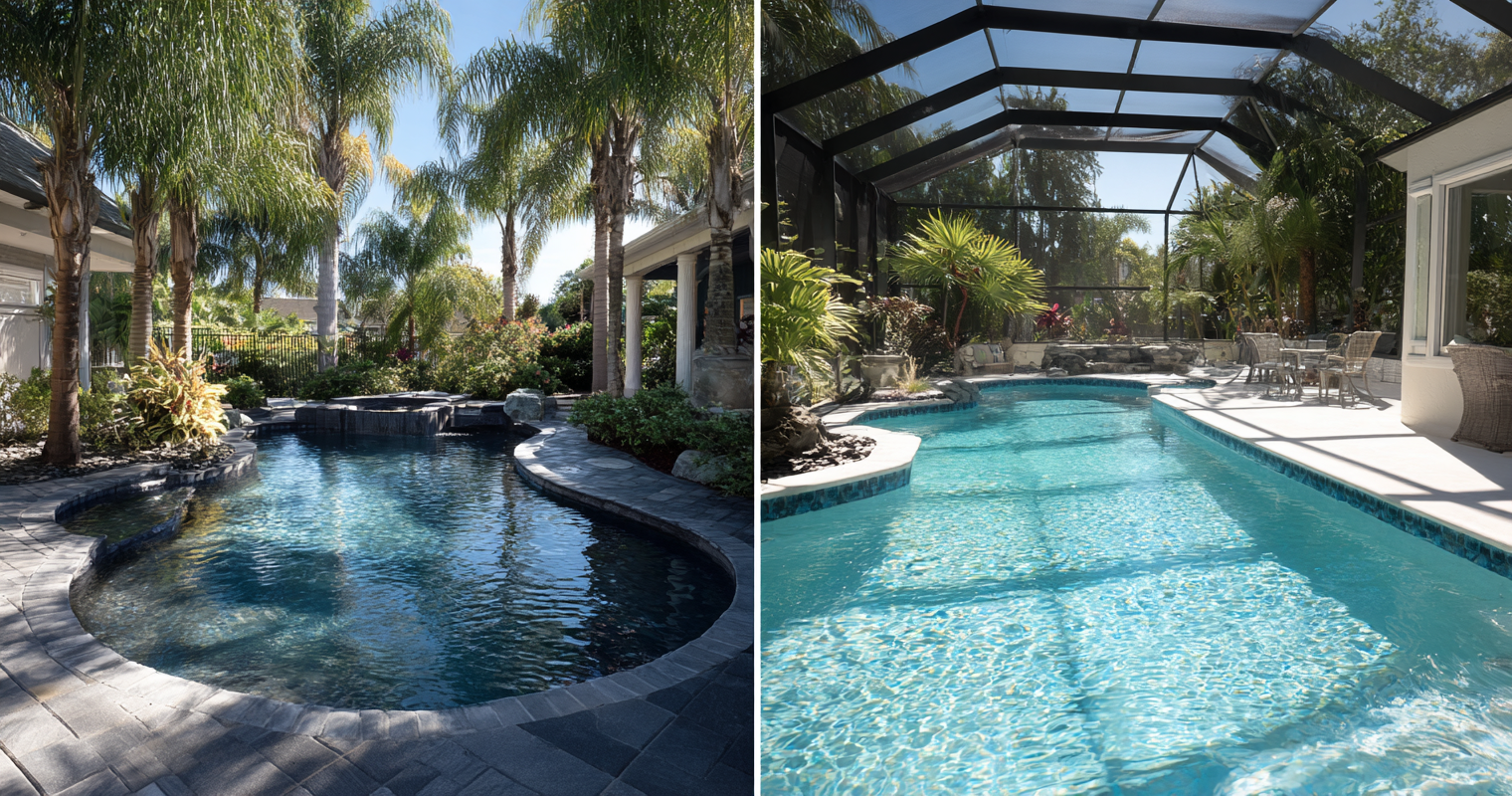
Nationally, vinyl liner pools make up a large share of the market. In Southwest Florida they barely register — and that is not an accident. Our high water table, limestone shelf, and hurricane exposure punish the wrong construction method. What survives here is what builders install here, and the local market has consolidated hard around two options.
$50K–$120KGunite, standard build
$45K–$85KFiberglass, installed
8–16 weeksTypical build, post-permit
25+ yearsGunite shell lifespan
The Three Pool Types, Compared
Gunite (Concrete)
Sprayed over a steel rebar cage and finished with plaster, Pebble Tec, or tile. Any shape, any depth, any feature — tanning ledges, raised spas, grottos, infinity edges. It is the default choice for Southwest Florida waterfront and custom lots, and the only realistic option if you want a shape that is not in a catalog. Trade-off: it is the slowest to build and the interior finish needs resurfacing roughly every 10 to 15 years.
Fiberglass
A single moulded shell delivered by truck and set in an excavated hole. Installation is measured in days rather than months once the site is prepped. The gel coat surface is non-porous, which means it holds fewer algae and typically needs less chemical maintenance than plaster. Trade-off: you are choosing from the manufacturer's catalogue of shapes and sizes, and the shell has to physically fit down your side yard.
Vinyl Liner
A steel or polymer wall frame with a vinyl membrane. Cheapest to install up front and common in northern states. In Southwest Florida it is rare, and for good reason: liners need replacing every 5 to 10 years, and a high water table can float or wrinkle a liner pool during heavy rain if the hydrostatic pressure is not managed. Most local builders will steer you away from it.
What Southwest Florida's Conditions Actually Demand
This is where national pool advice stops being useful. Four local conditions drive the decision more than price does.
The water table is high. Across much of Cape Coral, Fort Myers, and the coastal strip, groundwater sits close to the surface. Every in-ground pool here needs a hydrostatic relief valve so rising groundwater can equalise rather than push the shell upward. This matters most for fiberglass and vinyl, which are lighter than a gunite shell.
There is limestone under the sand. Excavation frequently hits a limestone shelf, particularly in Cape Coral. Breaking through it adds cost and time to any pool type, and it is one of the most common sources of a mid-project change order. It affects gunite and fiberglass equally — the hole has to be dug either way.
Salt air is corrosive. Within a few miles of the Gulf, salt air attacks metal. Equipment placement, fastener material, and tile selection all matter more here than inland. This is a materials-and-finishes decision more than a pool-type decision, but it should be on your list before you sign.
Hurricanes are a design input. A properly engineered in-ground pool is not usually the thing that fails in a storm — screen enclosures and equipment are. But wind load requirements shape what you can build over and around the pool, especially on barrier islands like Marco Island.
Saltwater or Chlorine?
This is the single most misunderstood question in the category, so it is worth being precise:
saltwater is not a pool type — it is a sanitising method. A saltwater pool is a gunite or fiberglass pool with a salt chlorine generator attached. The generator converts dissolved salt into chlorine on site, so you are not handling tablets and shock as often.
The system adds roughly $1,500 to $2,500 over a standard chlorine setup. Ongoing chemical costs are generally lower, but salt cells need replacing every three to seven years, which claws back part of the saving. The water feels softer and is gentler on eyes and swimwear, which is the reason most homeowners actually choose it. The trade-off worth knowing: salt is corrosive to some stone decking, natural stone copings, and metal fixtures, so it changes your materials list.
Finishes and Materials That Hold Up Here
1
Interior Finish
Standard plaster is the budget option and typically lasts 7 to 12 years in Florida conditions. Aggregate finishes such as Pebble Tec cost more up front and generally last 15 to 20 years, which usually makes them cheaper per year of service. On a pool you intend to keep, the aggregate finish is normally the better economic call.
2
Decking
Travertine and pavers stay markedly cooler underfoot than poured concrete in direct Florida sun, which is not a luxury consideration when the deck is unshaded in August. Pavers also lift and reset individually, which matters on ground that shifts.
3
Tile
Porcelain and glass tile handle salt air and humidity better than most natural stone. If you are near the Gulf, this is where to spend rather than economise.
4
Screen Enclosure
Not part of the pool, but nearly every Southwest Florida pool ends up with one. It keeps debris and insects out and cuts down on cleaning. Budget for it as a separate line item from the start rather than as an afterthought.
How to Choose
Reduced to the decisions that actually change the answer:
Choose gunite if you want a specific shape, you have an irregular or waterfront lot, you want a tanning ledge or integrated spa, or you plan to stay in the home long enough to amortise a longer build.
Choose fiberglass if a catalogue shape fits your yard, you want the shortest disruption, you value lower ongoing maintenance, and your lot has access for a truck and crane to place the shell.
Reconsider vinyl in this market. The up-front saving is real, but liner replacement cycles and water table risk make it a poor long-term fit for Southwest Florida.
The honest summary: for most homeowners here the decision is gunite versus fiberglass, and the deciding factor is usually lot access and shape flexibility rather than budget, because the price ranges overlap more than people expect.
Compare Pool Types and Materials
Above ground vs inground pools in Florida: real cost gap, lifespan, permits, HOA rules, and the resale impact before you decide.
Travertine, pavers, or concrete for a Florida pool deck?
Fitting a pool into a small Cape Coral backyard: setbacks, equipment space, screen enclosure footprint, and the shapes that work best.
Glass, porcelain, or stone pool tile in Southwest Florida?
Freeform or geometric pool shape? Compare cost, usable swim space, cleaning, deck efficiency, and which suits your home and lot.
Gunite vs fiberglass in Florida: cost, build time, lifespan, and maintenance compared, plus which suits your lot and water table.
Infinity edge pools in Cape Coral: typical $80K to $150K+ cost, the engineering required, and whether your canal lot actually suits one.
Pebble Tec vs plaster for a Florida pool: cost, lifespan, texture, and why the cheaper finish often costs more over fifteen years.
Pool and spa combo designs in Fort Myers: raised vs flush spas, shared-wall savings, heater sizing, and what it adds to your build.
Saltwater vs chlorine in Florida: real cost difference, maintenance savings, salt cell replacement, and the corrosion trade-off to plan for.
Frequently Asked Questions
What is the best pool type for Southwest Florida?
For most homeowners it is gunite or fiberglass. Gunite suits custom shapes, waterfront lots, and integrated features. Fiberglass suits standard shapes, faster installation, and lower ongoing maintenance. Vinyl liner pools are uncommon here because of the high water table and liner replacement cycles.
Is fiberglass or gunite better in Florida?
Neither is universally better. Fiberglass installs faster and needs less chemical maintenance thanks to its non-porous gel coat. Gunite gives unlimited shape and depth flexibility and a longer-lived shell. If your yard fits a catalogue shape, fiberglass is often the practical choice; if it does not, gunite is the only option.
How long does a gunite pool last in Florida?
The gunite shell itself commonly lasts 25 years or more. The interior finish is the wear item — standard plaster typically needs resurfacing every 7 to 12 years, while aggregate finishes such as Pebble Tec generally run 15 to 20 years before resurfacing.
Do fiberglass pools float in Florida's high water table?
They can if installed incorrectly. A correctly installed fiberglass pool includes a hydrostatic relief valve and proper backfill so groundwater pressure equalises instead of lifting the shell. This is a normal part of competent installation in this region — ask your builder how they handle it.
Is a saltwater pool a different type of pool?
No. Saltwater describes how the water is sanitised, not how the pool is built. A saltwater pool is a gunite or fiberglass pool fitted with a salt chlorine generator, which typically adds $1,500 to $2,500 to the build.
Are vinyl liner pools a bad idea in Southwest Florida?
They are a poor fit rather than universally bad. Liners need replacing every 5 to 10 years, and the high local water table raises the risk of liner movement during heavy rain. Most Southwest Florida builders recommend gunite or fiberglass instead.
Which pool type has the lowest maintenance?
Fiberglass generally does. The non-porous gel coat resists algae better than porous plaster, which usually means fewer chemicals and less brushing. A salt chlorine generator on any pool type further reduces routine chemical handling.
Does pool type affect home value in Southwest Florida?
Pool quality and condition matter more than construction type to most buyers. A well-maintained pool of either type adds appeal in a market where pools are close to expected. A neglected pool of any type reads as deferred maintenance.
Can I put a pool on a small Cape Coral lot?
Usually yes, but setback requirements and the shape of the remaining yard drive what fits. Gunite is often the better choice on tight or irregular lots precisely because it can be shaped to the space rather than the space to it.
Which pool type handles salt air best?
The shell material matters less than the fittings and finishes. Within a few miles of the Gulf, prioritise corrosion-resistant hardware, porcelain or glass tile, and careful equipment placement regardless of whether you choose gunite or fiberglass.
Related Pool Topics