
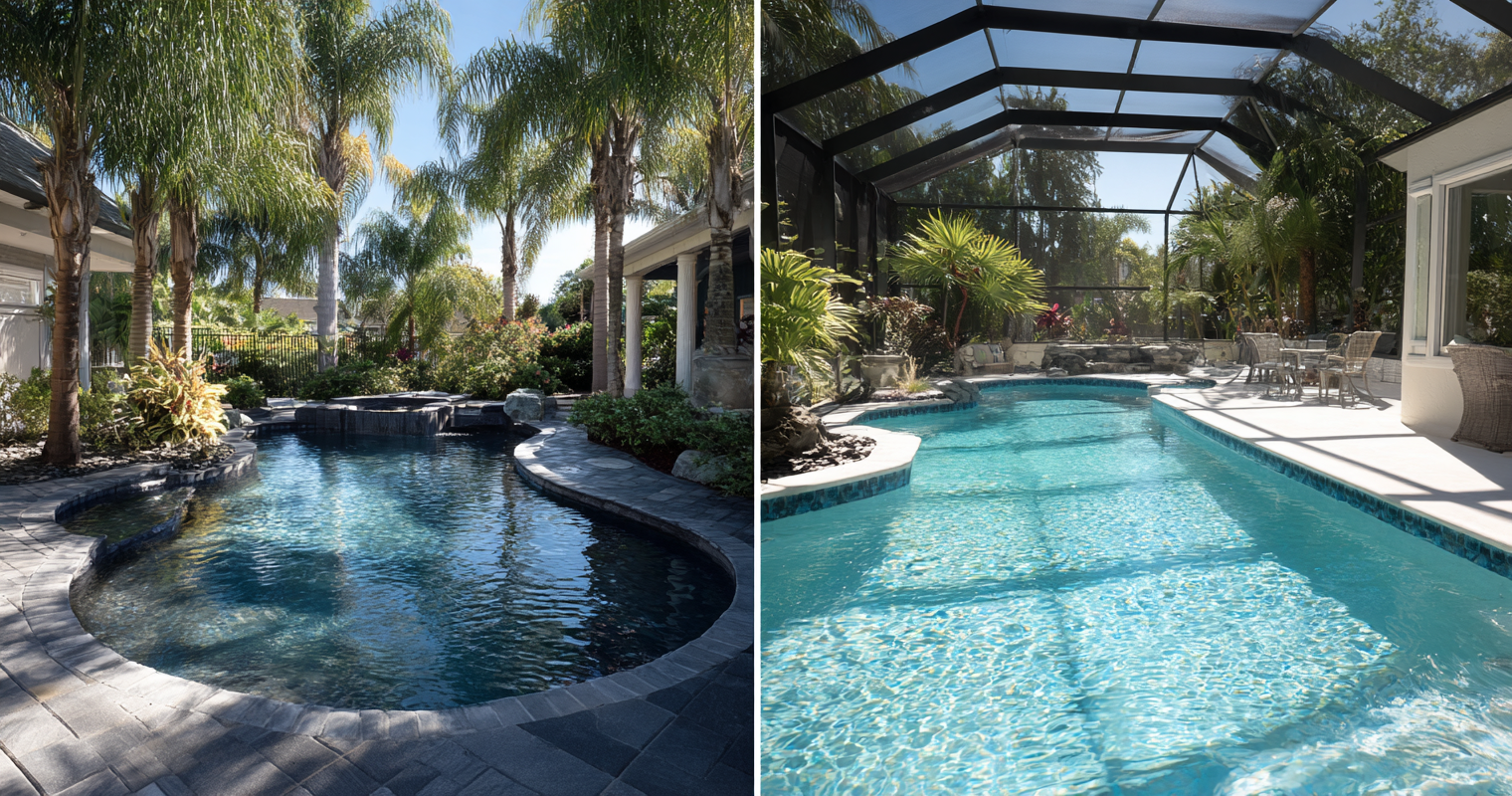
Pebble Tec vs Plaster Pool Finish
The finish is the wear item on a gunite pool — and the cheaper option is usually the more expensive one over fifteen years.
The Pebble Tec vs plaster pool finish decision only applies to gunite pools, and it is the one place where the cheapest option is reliably the most expensive over time. Plaster costs less up front and typically needs resurfacing every 7 to 12 years in Florida conditions. Aggregate finishes such as Pebble Tec cost more initially and generally run 15 to 20 years.
Run that over a fifteen-year ownership window and plaster usually means one full resurfacing that aggregate avoids. That single fact settles the decision for most homeowners planning to stay.
Two Different Surfaces Entirely
Plaster is a cement-based coating troweled smooth over the gunite shell. It gives the classic bright, uniform pool look and the smoothest surface underfoot. It is also porous, which is the root of most of its drawbacks.
Aggregate finishes — Pebble Tec being the best-known brand, alongside PebbleSheet, PebbleFina and similar products — mix small pebbles or quartz into the cement matrix. The pebbles are exposed at the surface, giving a textured, mottled appearance and a considerably harder wearing face.
Because plaster is porous, it holds algae more readily, stains more easily from metals and leaves, and is more vulnerable to etching if water chemistry drifts. Aggregate is denser and far more forgiving of the chemistry lapses that happen in real life.
Why the Cheaper Finish Usually Costs More
Plaster is meaningfully cheaper to apply — often several thousand dollars less on a typical Southwest Florida pool. That gap is real and it is why plaster remains the default inclusion in many base quotes.
The gap closes at the first resurfacing. Resurfacing is not a small job: it means draining the pool, stripping the old surface, and reapplying — a multi-thousand-dollar expense plus a pool you cannot use for a stretch. Hitting that at year nine rather than year eighteen is the whole economic argument.
The rule of thumb worth applying: if you expect to be in the house more than about ten years, aggregate is normally the cheaper choice per year of service. If this is a shorter-term property, plaster's lower entry cost may genuinely make more sense.
Texture, Looks, and Day-to-Day Feel
This is the real trade-off, and it is worth touching samples before deciding. Plaster is smooth underfoot. Aggregate is textured — some people describe it as grippy and reassuring, others find it rough on feet, particularly for children who spend hours on a shallow ledge. Finer aggregate blends such as PebbleFina soften this considerably compared with the original coarse Pebble Tec.
Visually they are quite different. Plaster gives a bright, uniform, classic pool. Aggregate gives depth and a mottled, more natural water colour, and the darker blends produce the deep lagoon look common on Southwest Florida waterfront builds.
Aggregate also hides minor staining and surface imperfection far better. On a white plaster pool every leaf stain and metal mark shows; the same marks disappear into a pebble finish.
Which to Choose
Choose aggregate if you are staying long term, want the deeper water colour, or want a finish that tolerates imperfect chemistry. Choose plaster if you want the smoothest surface underfoot, prefer the bright classic look, or the up-front budget is genuinely tight. Whichever you pick, ask for the finish to be named specifically in your contract — 'interior finish' with no product named is a common source of dispute.
Related Pool Topics
Frequently Asked Questions
Is Pebble Tec worth it over plaster?
For most homeowners staying more than about ten years, yes. Plaster typically needs resurfacing every 7 to 12 years while aggregate finishes generally run 15 to 20, so aggregate usually avoids one full resurfacing over that window.
How long does pool plaster last in Florida?
Typically 7 to 12 years. Florida's year-round use, strong sun, and heavy rain cycles are harder on a porous plaster surface than in cooler climates, and drifting water chemistry shortens it further.
How much more does Pebble Tec cost?
Aggregate finishes commonly add several thousand dollars over standard plaster on a typical Southwest Florida pool. The exact figure depends on pool size and the specific aggregate blend chosen.
Is Pebble Tec rough on your feet?
The original coarse blends are noticeably textured and some people find them rough, especially children on a shallow ledge. Finer blends such as PebbleFina are much smoother. Touch physical samples before deciding.
Which finish hides stains better?
Aggregate, by a wide margin. Its mottled surface disguises leaf staining, metal marks, and minor imperfection. On white plaster every mark is visible.
Does the finish affect water colour?
Significantly. Plaster gives a bright classic blue. Aggregate blends give deeper, more natural tones, and darker blends produce the lagoon look common on Southwest Florida waterfront pools.
Does the finish choice apply to fiberglass pools?
No. Fiberglass pools have a factory-applied gel coat surface and are not plastered or finished with aggregate. This decision only applies to gunite pools.
What is resurfacing and how disruptive is it?
Resurfacing means draining the pool, stripping the worn interior surface, and reapplying a new one. It is a multi-thousand-dollar job and the pool is out of use while it happens, which is why extending the interval matters.