
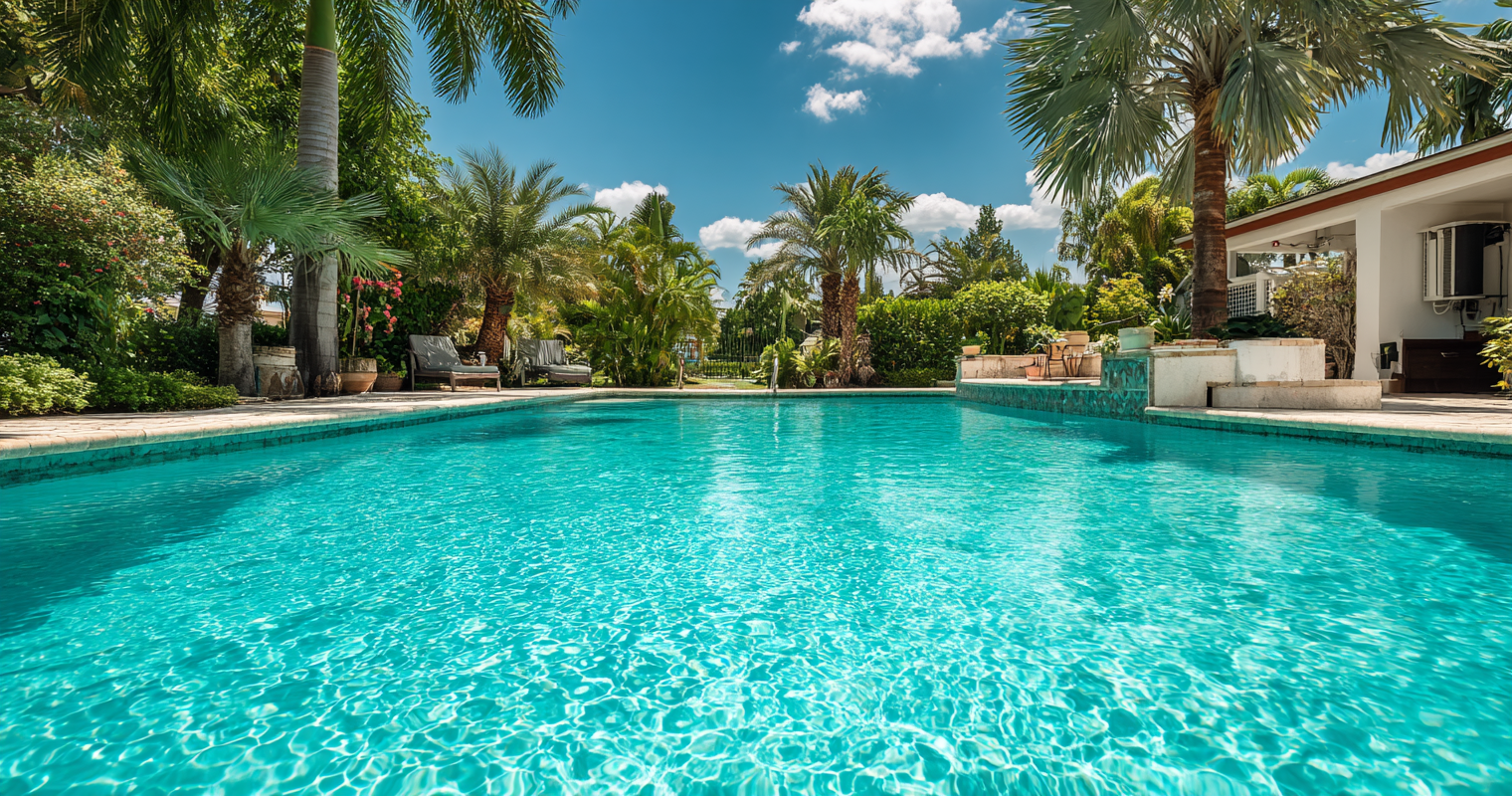
Saltwater vs Chlorine Pool in Florida
What the salt system actually costs, what it really saves, and the trade-off nobody mentions until your deck starts showing it.
The saltwater vs chlorine pool in Florida debate starts with a misunderstanding worth clearing up immediately: a saltwater pool is still a chlorine pool. The salt cell generates chlorine on site from dissolved salt rather than you adding it in tablet or liquid form. The sanitiser is identical. Only the delivery method changes.
That reframing matters, because it explains both the appeal and the limits. You are buying convenience and water feel, not a chemical-free pool.
What the Salt System Costs and Saves
A salt chlorine generator adds roughly $1,500 to $2,500 to a new build. On a $70,000 pool that is a rounding error, which is why most new Southwest Florida pools are specified with one from the start.
Ongoing chemical costs typically fall from around $80 to $150 a month for a manually chlorinated pool to roughly $40 to $80 with a salt system. Against that, the salt cell itself is a consumable: expect replacement every three to seven years at roughly $400 to $900. Amortised, that claws back a meaningful share of the monthly saving.
The honest summary is that saltwater is close to cost-neutral over the life of the pool. People who choose it for the money are usually disappointed; people who choose it for the water and the reduced handling are usually happy.
What Actually Changes About Ownership
The salt level in a saltwater pool sits around 3,000 parts per million — roughly a tenth of seawater, and below the threshold where most people taste it. The water feels softer, and it is noticeably gentler on eyes, skin, and swimwear. In a climate where a pool gets used year round, that difference compounds.
You also stop storing and handling chlorine tablets and liquid shock, which is a genuine quality-of-life improvement and one less hazardous material in the garage.
What does not change: you still test and balance the water, still manage pH and alkalinity, still brush and vacuum, and still shock the pool after heavy rain or heavy use. Salt systems reduce chemical handling; they do not eliminate pool maintenance.
Corrosion and What It Changes in Your Build
Salt is corrosive, and this is the part that gets glossed over. Over years, salinated water and splash-out attack certain materials: natural stone coping and decking, untreated metal fixtures, some light housings, and heater components not rated for salt.
This is manageable, but it has to be designed in rather than discovered later. Specify corrosion-resistant hardware, choose porcelain or properly sealed stone over vulnerable natural stone, and confirm the heater and light fittings are salt-rated. Near the Gulf, where salt air is already attacking metal from outside, this matters more.
If you are converting an existing chlorine pool rather than building new, this is the item to audit first. A conversion is otherwise straightforward — typically $1,500 to $2,500 for the generator and installation — but existing stone and metalwork were chosen without salt in mind.
Which Should You Choose?
Choose saltwater if you want softer water, less chemical handling, and you are building new so materials can be specified accordingly. Stay with traditional chlorine if you are working to the tightest possible budget, or you have existing natural stone hardscape you are not prepared to replace or reseal on a schedule.
Related Pool Topics
Frequently Asked Questions
Is a saltwater pool better than chlorine in Florida?
Better for water feel and reduced chemical handling; roughly cost-neutral over the life of the pool. A saltwater pool is still sanitised by chlorine — the salt cell simply generates it on site rather than you adding it manually.
How much does a salt system add to a pool?
Roughly $1,500 to $2,500 for the generator and installation, whether on a new build or as a conversion of an existing chlorine pool.
Does a saltwater pool really save money?
Monthly chemical costs typically drop from around $80 to $150 down to roughly $40 to $80. But salt cells need replacing every three to seven years at $400 to $900, which offsets much of the saving. Treat it as close to cost-neutral.
How salty is a saltwater pool?
About 3,000 parts per million, roughly a tenth the salinity of seawater. Most swimmers do not taste it, and it is well below the level that stings eyes.
Does saltwater damage pool decking in Florida?
It can over time. Salinated splash-out attacks natural stone coping, untreated metal fixtures, and non-salt-rated equipment. Specify corrosion-resistant hardware and porcelain or properly sealed stone, and confirm heaters and lights are salt-rated.
Can I convert my existing pool to saltwater?
Yes, and it is straightforward — typically $1,500 to $2,500. The thing to audit first is your existing hardscape and metalwork, since it was chosen without salt exposure in mind.
Do saltwater pools still need chemicals?
Yes. You still test and balance pH and alkalinity, brush and vacuum, and shock after heavy rain or heavy use. Salt systems reduce chemical handling rather than eliminating maintenance.
How long do salt cells last?
Typically three to seven years depending on run time, water chemistry, and how well the cell is cleaned. Replacement generally runs $400 to $900. Keeping calcium hardness in range extends cell life noticeably.