Best Pool Deck Materials for Florida Sun and Rain
Heat underfoot, afternoon downpours, and ground that moves — how travertine, pavers, and concrete actually perform here.
Choosing the best pool deck materials for Florida comes down to three local realities that do not apply in most of the country: unshaded surfaces get genuinely painful underfoot in summer, afternoon storms dump water faster than a poorly graded deck can shed it, and sandy soil shifts enough to crack rigid surfaces over time.
Get those three right and the aesthetic choice takes care of itself. Get them wrong and you have an expensive deck nobody wants to stand on in August.
Surface Heat Is the First Filter
In direct Southwest Florida sun, deck surface temperature is not a comfort detail — it determines whether the deck gets used between roughly eleven and four. Poured grey concrete and dark pavers absorb and hold the most heat. Travertine and light-coloured pavers run markedly cooler, which is why travertine dominates the higher end of the local market.
Colour matters as much as material. A light-toned paver will outperform a dark one of the same type. If you take one thing from this page: go lighter than instinct tells you.
How Each Option Performs Here
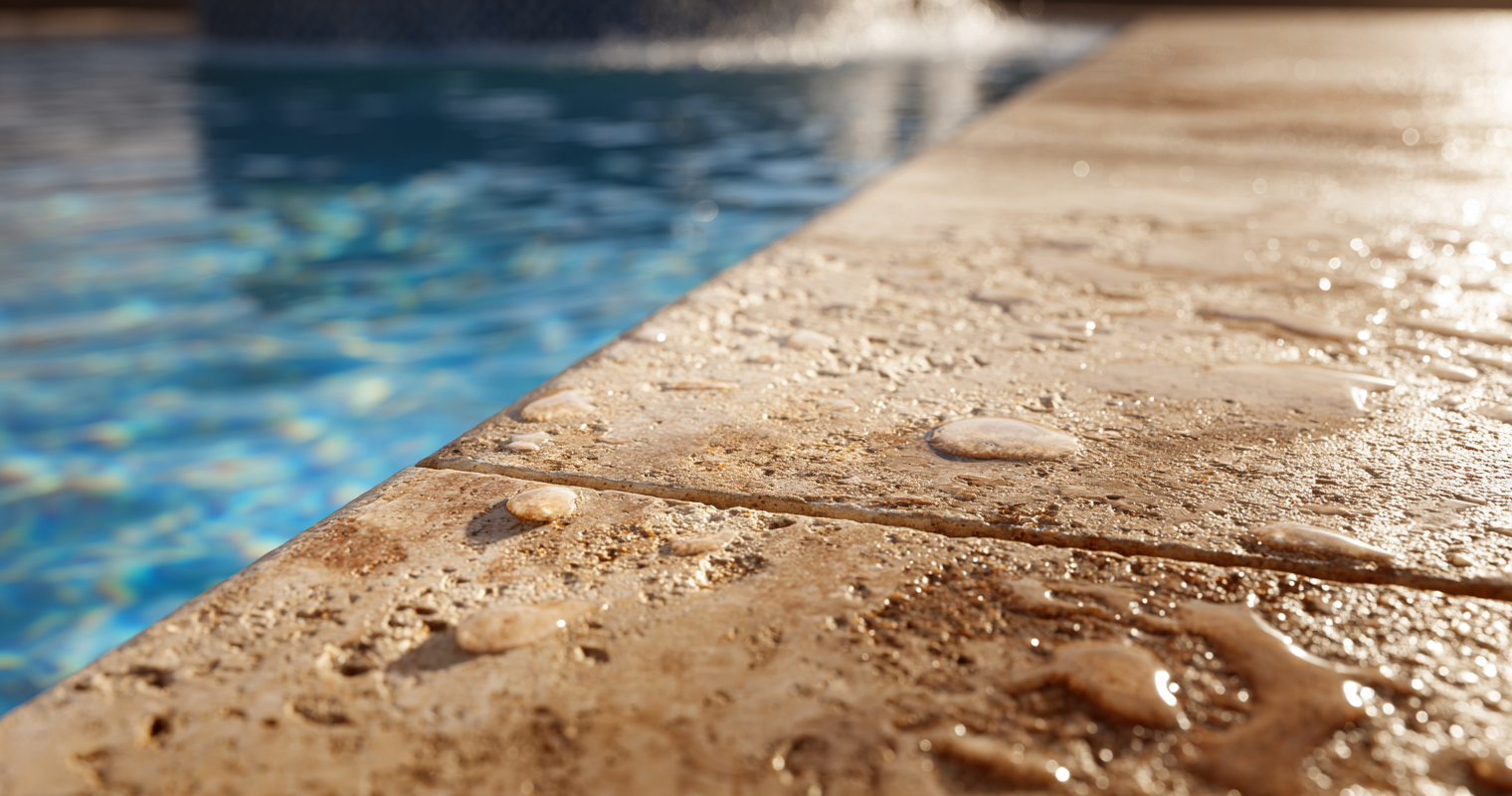
Travertine is the local favourite for good reason. Natural stone, stays notably cool underfoot, naturally textured so it holds grip when wet, and it looks the part. It costs more than pavers, needs periodic sealing, and is vulnerable to acidic cleaners. Near saltwater pools, sealing discipline matters more.
Concrete pavers are the practical workhorse. Wide colour range, good value, and the decisive advantage in Florida: individual units lift and reset. When ground settles — and here it does — you pull the affected pavers, re-level the base, and put them back. No visible patch.
Poured concrete is cheapest and fastest, and it is what many builders quote as standard. It gets hot, and it cracks as ground moves. A crack in poured concrete is permanent and obvious. Cool-deck coatings and broom finishes help with heat and grip, but coatings weather and need reapplying.
Shell stone and coral stone sit alongside travertine as premium options with similar cool-surface behaviour, at similar or higher cost.
Rain, Slip, and Ground Movement
A Florida pool deck needs to shed water fast. Standing water after a storm points to grading or a drainage problem, and it accelerates staining, algae growth on the surface, and slip risk. Permeable paver installations let water pass through the joints, which is a real advantage during storm season.
Slip resistance should come from surface texture, not from a coating you have to maintain. Travertine and textured pavers hold grip naturally when wet. Smooth-troweled concrete does not — it needs a broom finish or a cool-deck texture applied, and that treatment wears.
On ground that settles, repairability is the whole argument for a unit-based surface. This is the single most underrated factor in Florida deck selection, and it is invisible on the day the deck is finished.
A Reasonable Default
For most Southwest Florida homeowners, light-coloured travertine or light concrete pavers over a properly compacted and graded base is the sensible answer: cool underfoot, grippy when wet, drains well, and repairable when the ground moves. Poured concrete makes sense on the tightest budgets, but specify a light colour and a textured finish rather than smooth grey.
Related Pool Topics
Frequently Asked Questions
What is the coolest pool deck material for Florida?
Travertine and light-coloured pavers stay noticeably cooler underfoot than poured concrete or dark pavers. Colour matters as much as material — a light paver outperforms a dark one of the same type.
Are pavers or concrete better for a Florida pool deck?
Pavers, in most cases. They run cooler in light colours, grip better when wet, and can be lifted and reset individually when ground settles. Poured concrete is cheaper and faster but cracks permanently as soil moves.
Does travertine get hot around a pool?
Far less than concrete. Travertine is one of the coolest common deck surfaces in direct sun, which is why it is popular across Southwest Florida despite costing more than pavers.
How do I stop my pool deck being slippery?
Choose a naturally textured surface rather than relying on a coating. Travertine and textured pavers grip well when wet. Smooth-troweled concrete needs a broom finish or cool-deck texture, and those treatments wear and need reapplying.
Do pool decks crack in Florida?
Poured concrete does, as sandy soil settles and shifts. The crack is permanent and visible. Paver and stone decks absorb ground movement at the joints, and affected units can be lifted, re-levelled, and reset invisibly.
Does deck material need to change for a saltwater pool?
Yes, worth planning for. Salinated splash-out attacks some natural stone and untreated metal over time. Porcelain, sealed travertine, and quality concrete pavers handle it better, and sealing discipline matters more.
How important is drainage on a pool deck here?
Very. Southwest Florida storms drop water quickly, and standing water causes staining, surface algae, and slip risk. Proper grading is essential, and permeable paver installations that let water pass through the joints are a real advantage.
What is the cheapest pool deck option in Florida?
Poured concrete is the lowest up-front cost and what many builders quote as standard. If budget drives the decision, specify a light colour and a textured or cool-deck finish rather than smooth grey, and accept that cracking is likely over time.