Best Pool Shape for a Small Backyard in Cape Coral
Setbacks, equipment space, and screen enclosure footprint decide what fits — usually before shape does.
Working out the best pool shape for a small backyard in Cape Coral starts in the wrong place for most homeowners. Shape is the last decision, not the first. What actually determines the pool you can build is the usable rectangle left after setbacks, equipment placement, and screen enclosure footprint are subtracted from the lot.
Cape Coral's standard lots are frequently narrower than people assume once those subtractions are made. The good news: a well-designed compact pool on a tight lot often works better than an oversized one, because the deck space around it is what makes a pool usable.
Find Your Real Buildable Area
Before considering shape, establish the buildable envelope. Pool setback requirements apply from property lines, and additional constraints apply to easements, seawalls on canal lots, and septic systems where present. Cape Coral has its own requirements layered on Lee County's, and canal-front lots carry seawall-specific considerations that inland lots do not.
Get a current survey. On a tight lot the difference between an assumed boundary and the surveyed one can be the difference between a pool that fits and one that does not. This is also the document your builder and the permit office will work from.
Then subtract the practical items: an equipment pad needs a location with access and clearance, and if you want a screen enclosure — and in Southwest Florida you probably do — its footing footprint extends beyond the pool and deck. Enclosures are frequently the constraint that forces a redesign late, so factor it in from the start.
Shapes That Suit Tight Lots
Rectangular and geometric shapes are the most space-efficient. A rectangle uses nearly all of the envelope it occupies, leaves clean usable deck on all sides, and suits the lot geometry of most Cape Coral properties. On a genuinely small yard this is usually the right answer.
Lap and cocktail pools deserve more consideration than they get. A narrow lap pool suits a long thin side yard, and a compact cocktail or plunge pool — small, often deeper, sometimes with seating and jets — delivers most of the lifestyle value of a pool in a fraction of the footprint. In a climate where a pool is mostly for cooling off and entertaining rather than swimming laps, this is a genuinely good fit.
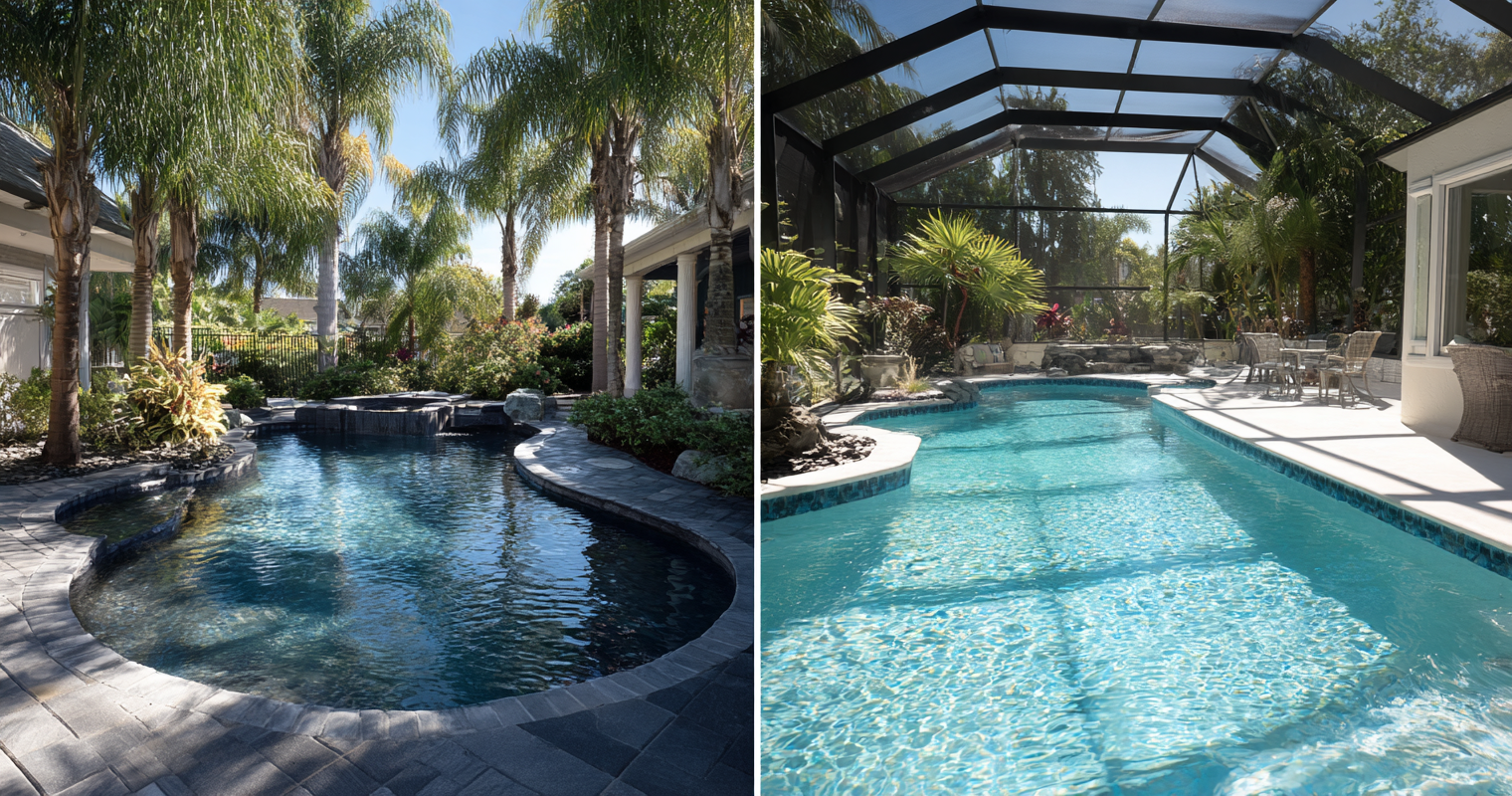
Freeform shapes are harder to fit efficiently. Curves waste envelope and create awkward slivers of deck that cannot be used. They look generous on a large lot and cramped on a small one.
Gunite has the real advantage here. Because it is formed on site, it can be shaped to whatever the envelope allows, including angled or irregular outlines that follow a boundary. A fiberglass shell has to fit as manufactured, and on a constrained lot the catalogue may simply not contain the shape you need.
Making a Small Pool Feel Larger
Prioritise deck over water. Counterintuitive but reliable: a slightly smaller pool with generous deck on the primary side is more usable and feels bigger than a larger pool crowded to its edges. Deck is where people actually spend their time.
Use a tanning ledge instead of a shallow end. A shelf gives you the lounging function without dedicating a large volume of the pool to water nobody swims in. On a compact pool this is one of the highest-value decisions available.
Push the pool toward one boundary where setbacks allow, rather than centring it. Consolidating the deck into one usable area beats having narrow unusable strips on all four sides.
Finally, go darker on the interior finish. A darker aggregate gives depth and makes a compact pool read as deeper and more substantial than a bright white plaster finish of identical dimensions.
Before You Commit
Confirm three things with your builder in writing: the buildable envelope from a current survey, where the equipment pad will physically sit, and whether the screen enclosure footprint fits. Those three settle what is possible. Shape follows.
Related Pool Topics
Frequently Asked Questions
What is the best pool shape for a small Cape Coral backyard?
Rectangular and geometric shapes are the most space-efficient, using nearly all of the available envelope and leaving clean usable deck. Freeform shapes waste space on tight lots by creating unusable slivers of deck.
How much room do I actually need for a pool?
Less than most people expect, but the pool is not the only footprint. You need the pool, deck, an equipment pad with access, and — if you want one — the screen enclosure footing footprint, all inside your setbacks. Start from a current survey.
Do I need a survey before designing a pool?
On a small lot, yes. The difference between an assumed boundary and the surveyed one frequently decides whether a pool fits. It is also the document your builder and the permit office will work from.
Is gunite or fiberglass better for a small yard?
Gunite, usually. It is formed on site so it can follow an irregular envelope or angle along a boundary. A fiberglass shell must fit as manufactured, and the catalogue may not contain a shape that suits a constrained lot.
What is a cocktail or plunge pool?
A compact pool, often deeper than a standard pool and sometimes fitted with seating and jets. It delivers most of the cooling-off and entertaining value of a full pool in a much smaller footprint, which suits Southwest Florida use patterns well.
Should I sacrifice deck space for a bigger pool?
Generally no. A slightly smaller pool with generous deck on the main side is more usable and feels larger than a big pool crowded to its edges. Deck is where people actually spend their time.
Does a screen enclosure limit pool size?
Frequently, yes. The enclosure's footings extend beyond the pool and deck, and it is often the constraint that forces a late redesign. Decide whether you want one before finalising pool dimensions, not after.
Can I build a pool on a Cape Coral canal lot with a small yard?
Often yes, but seawall setbacks and easements apply on top of standard property line setbacks, which reduces the buildable envelope further. Canal lots need their specific constraints confirmed before design begins.