
How to Prepare Your Yard for Pool Construction
What to move, what to protect, and the conversations to have before heavy equipment arrives.
Knowing how to prepare your yard for pool construction saves money and prevents most of the arguments that come up mid-build. Heavy equipment needs a route in, the work area will extend well beyond the pool outline, and anything left in the way is at risk.
Most of this is straightforward. The parts worth real attention are access, irrigation, and agreeing responsibilities in writing before anyone arrives.
Getting Equipment Into the Backyard
Excavation needs a machine in your garden, and the access route determines both cost and disruption. Walk the route with your builder before contract and establish exactly how equipment will get in.
Fence panels are commonly removed and reinstated — confirm who does that and who pays. Gates are frequently too narrow, so a section of fence usually comes out instead.
Overhead obstructions matter as much as width. Low branches, power lines, and eaves all constrain what equipment can pass. Where a fiberglass shell is being craned in, the crane needs a position with clear overhead access, which is a much larger requirement than a bobcat route.
Where access is genuinely restricted — a narrow side yard, a corner lot with awkward approach, or a canal-front property with no street-side route — smaller equipment or hand excavation may be needed, and that costs considerably more. It is far better to know that before signing than to discover it on day one.
Expect the access route itself to suffer. Grass along it will likely be destroyed, and pavers or driveway surfaces can be damaged by tracked machinery. Agree in advance what is protected and what is restored.
What to Move, Protect, and Arrange
Plants worth saving. Anything in the work area or along the access route should be relocated in advance if you want to keep it. Once construction starts, plants in the way are treated as obstacles. Moving mature planting is best done well before, so it has time to establish elsewhere.
Irrigation. Sprinkler lines in the work area will almost certainly be cut. Utility marking does not cover irrigation. Agree who is responsible for capping, rerouting, and reinstating the system, and whether it is in the contract price. This is one of the most common post-build disputes.
Anything portable. Furniture, garden structures, sheds if they sit in the way, play equipment, and decorative items should be moved and stored. Clear the whole work area, not just the pool footprint.
Pets. Plan for the yard being open and unsafe for weeks. Fence sections will be down, there will be an open excavation, and gates may be left open by crews. Arrange somewhere else for pets during the day, and never rely on the existing fence during construction.
Neighbours. A courtesy conversation costs nothing and prevents friction. Noise, equipment, dust, and trucks will affect them, and on a shared driveway or narrow street, access may too.
Parking and material storage. Agree where materials will be stockpiled and where trucks will park. Deliveries of rebar, tile, decking, and equipment all need somewhere to sit.
What Your Yard Will Look Like
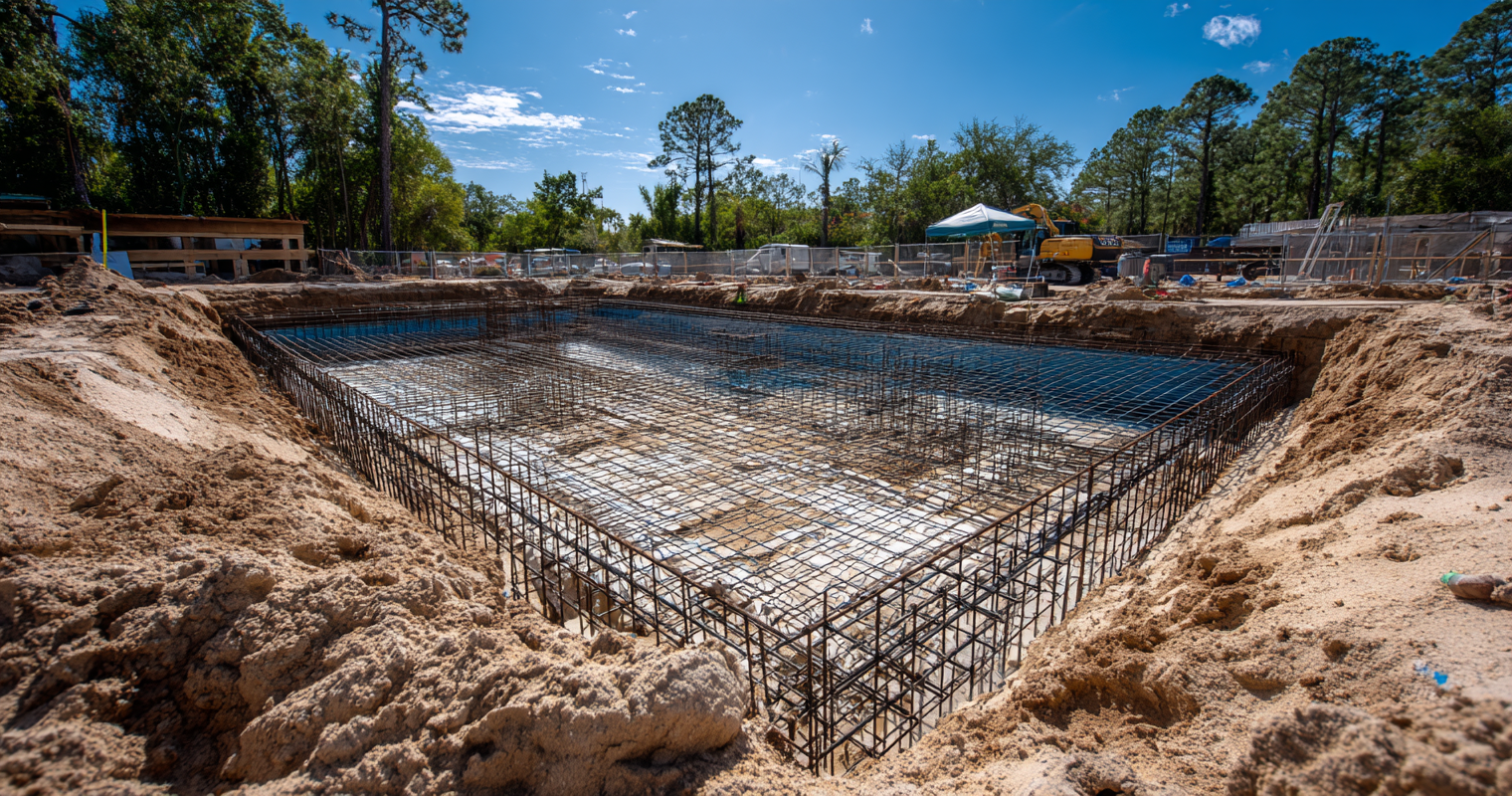
Be realistic about the state of the garden. The disturbed area extends well beyond the pool. Grass will be destroyed across the work zone and access route, the ground will be compacted by machinery, and after rain the site becomes genuinely muddy.
Plan for restoration as part of your budget rather than as a surprise. Re-sodding the affected area, repairing irrigation, and replanting is a real cost that frequently is not in the pool contract. Establish what is included and what is not.
Dust and noise will be significant during excavation, gunite, and decking. Gunite day in particular is loud and involves substantial equipment.
Site security matters throughout. An open excavation is a genuine hazard, particularly with children or pets, and fencing will be down. Confirm with your builder how the site is secured during construction and whose responsibility that is.
The Conversation to Have First
Before signing, settle six things in writing: the access route and who restores it, responsibility for fence removal and reinstatement, irrigation repair, spoil removal, what landscape restoration is included, and how the site is secured while work is underway. All six are cheap to agree upfront and expensive to argue about later.
Related Pool Topics
Frequently Asked Questions
What do I need to do before pool construction starts?
Clear the work area and access route of anything portable, relocate plants you want to keep, agree irrigation responsibility, arrange for pets, and confirm the access route and restoration terms with your builder in writing.
How much space do they need to get equipment in?
Enough for a compact excavator or bobcat at minimum, with overhead clearance for branches and power lines. Fence panels usually come out. If a fiberglass shell is being craned in, the requirement is considerably larger.
What happens to my sprinkler system?
Lines in the work area will almost certainly be cut, and utility marking does not cover irrigation. Agree in advance who caps, reroutes, and reinstates the system and whether it is in the contract price.
Will they ruin my grass?
Grass along the access route and across the work area is generally destroyed, and the ground gets compacted by machinery. Budget for re-sodding as restoration, and confirm what your contract includes.
Do I need to move my plants?
Anything in the work area or access route should be relocated in advance if you want to keep it. Move mature planting well ahead so it has time to establish elsewhere.
Is my yard safe for pets during construction?
No. Fence sections will be down, there is an open excavation, and gates may be left open by crews. Arrange somewhere else for pets during working hours and do not rely on the existing fence.
Should I tell my neighbours?
It is worth a courtesy conversation. Noise, dust, equipment, and truck traffic will affect them, and on a narrow street or shared driveway access may too. It prevents a lot of avoidable friction.
Who is responsible for securing the site?
Confirm this with your builder before work starts. An open excavation is a real hazard, especially with children or pets, and existing fencing will be compromised. Temporary barriers during construction are reasonable to expect.