
Kid-Friendly Pool Features for Florida Families
Design features children enjoy — and the layered safety measures that matter far more than any of them.
Planning kid-friendly pool features for Florida families has to begin with safety, because the context here is serious. Drowning is a leading cause of death for young children in Florida, and it is silent and fast. No design feature substitutes for layered protection and constant adult supervision.
With that established, thoughtful design genuinely does make a pool better for families — easier to supervise, more usable for small children, and more fun as they grow. This page covers both, in that order.
Layers of Protection, Not a Single Barrier
The principle accepted across drowning-prevention guidance is layering: multiple independent measures, so that a failure in one is caught by another. No single measure is sufficient on its own.
Barriers. A compliant pool barrier that isolates the pool from the house and yard, with self-closing and self-latching gates that open outward and latch out of reach of small children. Florida's Residential Swimming Pool Safety Act sets requirements for residential pools, and specifics are enforced locally — confirm current requirements with your city or county building department, and treat what your builder proposes as something to verify rather than assume.
Door and window alarms. Any door or window giving direct access from the house to the pool area should alarm. A large share of young-child drownings happen when a child gets to the water during a gap in supervision, often having been indoors moments earlier.
Supervision. A designated adult watching the water, without a phone, with responsibility handed over explicitly rather than assumed. Drowning does not look like it does in films: it is quiet and takes seconds.
Swim lessons. Water competence is a genuine protective layer. Florida programmes are widely available for very young children.
Rescue equipment and CPR. Keep reaching equipment and a flotation device at the pool, and make sure at least one adult in the household holds current CPR certification.
Features That Make Supervision Easier
A tanning ledge is the single most useful family feature. A shelf 6 to 12 inches deep gives small children somewhere to sit and play in inches of water within arm's reach, and it is where parents naturally sit too. It is a supervision aid, not a safety device.
Consistent shallow depth. For a family pool, a uniform 3.5 to 4.5 feet is more useful than a deep end. Children can stand across most of the pool, games work better, and it removes the sudden drop-off that catches out a child who wandered too far.
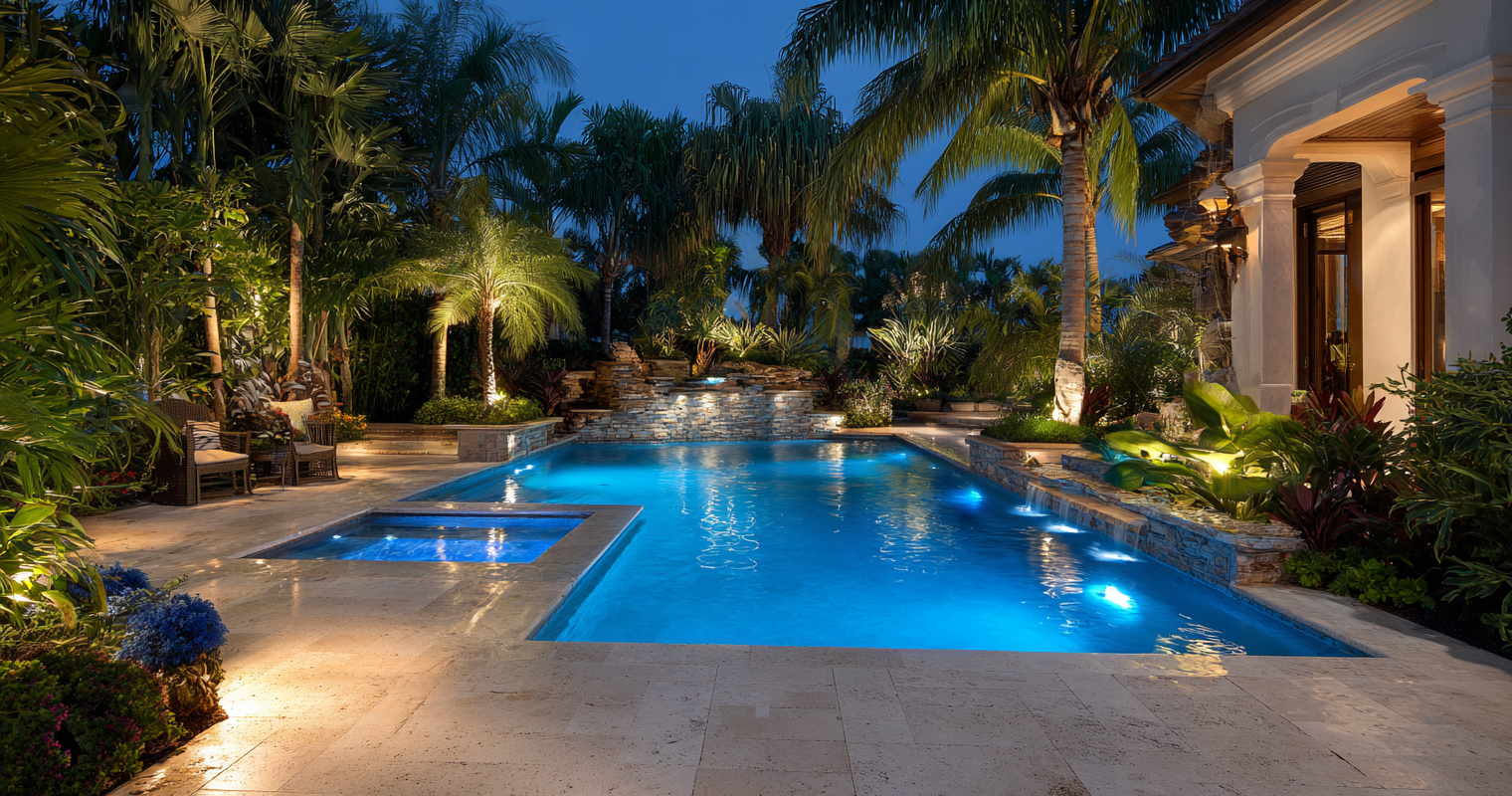
Clear sight lines. Design so the whole pool is visible from the kitchen and main living area. Raised walls, tall planting, and solid features that create blind spots work directly against supervision. This is one of the most underrated safety-by-design decisions available.
Entry steps rather than ladders. Wide steps with a handrail are far easier and safer for small children than a ladder, and they double as seating.
Good lighting. A well-lit pool means you can see the bottom clearly after dark, which matters if there is ever any doubt about where a child is.
Features Children Actually Enjoy
Bubblers on a tanning ledge are consistently popular with small children and cost relatively little, though they must be plumbed during construction.
A beach or zero-depth entry slopes gradually from the deck into the water like a shoreline. Excellent for toddlers and for accessibility, though it uses more space than steps and suits larger yards.
A shallow bench or sun shelf with jets extends usefulness as children get older, and adults use it too.
Slides and diving boards require honest assessment. Both require specific depth and clearance, both carry injury risk, and both affect insurance in some cases. Diving in particular demands considerably more depth than a family pool otherwise needs, which conflicts with the consistent shallow depth that serves young children best. Many families conclude a slide is worth it and a diving board is not.
One Practical Note
Pool safety requirements can apply at the point of construction and at resale, and they are enforced locally. Build compliance in from the start rather than discovering a gap later — it is cheaper, it integrates better with the design, and it is the reason to raise this with your builder and building department at design stage rather than at final inspection.
Related Pool Topics
Frequently Asked Questions
What pool safety measures are required in Florida?
Florida's Residential Swimming Pool Safety Act sets requirements for residential pools, and enforcement details are handled locally. Confirm current specifics with your city or county building department, since requirements can vary and change.
What is the best pool depth for young children?
A consistent 3.5 to 4.5 feet works well for family pools. Children can stand across most of the pool, games work better, and there is no sudden drop-off. A deep end adds cost and reduces usable family space.
Is a tanning ledge good for toddlers?
It is very useful. A shelf 6 to 12 inches deep lets small children sit and play in inches of water within arm's reach. It is a supervision aid rather than a safety device, and never replaces barriers, alarms, and constant adult supervision.
Do I need a fence around my pool in Florida?
Residential pools are subject to barrier requirements under Florida law, with local enforcement. A compliant barrier isolating the pool, with self-closing and self-latching gates, is the foundation. Verify the exact requirement with your local building department.
What are door alarms and do I need them?
Alarms on doors and windows giving direct access to the pool area alert you if a child gets out. They are an important layer, because many young-child drownings happen when a child reaches the water during a brief lapse, often straight from indoors.
Should I put a diving board in a family pool?
Usually not. Diving requires considerably more depth and clearance than a family pool otherwise needs, which conflicts with the consistent shallow depth that suits young children. It also carries injury risk and can affect insurance.
What is a beach entry pool?
A gradual slope from the deck into the water, like a shoreline. It is excellent for toddlers and for accessibility, and it looks striking. It uses more space than steps, so it suits larger yards better.
How do I design a pool that is easier to supervise?
Keep clear sight lines from the kitchen and main living areas to the whole pool, avoid raised walls and planting that create blind spots, use wide entry steps rather than a ladder, and light the pool well so the bottom is clearly visible after dark.