
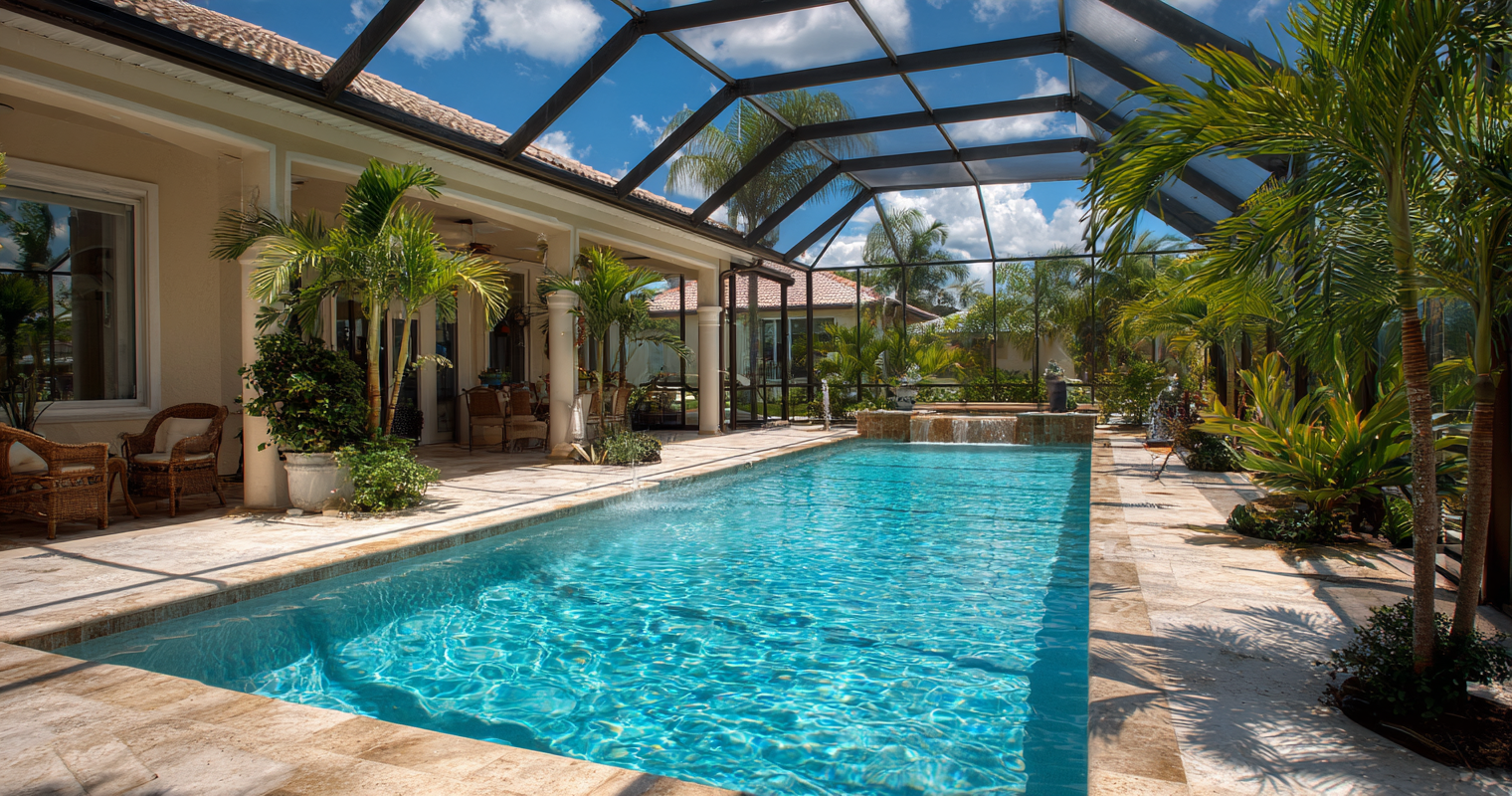
Planning a Naples Pool? Start With Your Parcel.
A Naples address can mean either of two permit offices and two sets of pool setbacks, and near the Gulf, coastal rules and flood zones shape the design. Canvas helps you sort out what applies to your lot before a licensed contractor builds it.
- Florida CPC-licensed contractors only
- Vetted on quality, timeline & communication
- Free · no obligation
City of Naples or unincorporated Collier: which is your lot in?
A Naples mailing address doesn't tell you who permits your pool. The City of Naples had 19,115 residents in the 2020 Census; Collier County had 375,752 (U.S. Census Bureau). Most county residents live outside the city, yet many still have a Naples address.
Inside the city, pool permits go through the City of Naples Building Department and its CityView portal. Outside it, they go through Collier County Growth Management and the county's separate CityView portal.
How to check: enter your address on the City of Naples GIS map or call the city Building Department at 239-213-5020.
| City of Naples | Unincorporated Collier County | |
|---|---|---|
| Permit office | Building Department, 295 Riverside Cir. · 239-213-5020 | Growth Management, 2800 N. Horseshoe Dr. · 239-252-2400 |
| Rear setback, single-family pool | 15 ft from the rear lot line | 10 ft (20 ft on waterfront or golf-course lots with a deck more than 4 ft above seawall or bank) |
| Gulf-front lots | DEP coastal permit plus a city setback-line permit | DEP coastal permit; the coastal line governs where it applies |
City of Naples lots: 15 feet back, equipment screened.
City Code §56-45 governs residential pools outside the RE rural estates district:
-
Rear yard only. An unroofed or screened pool may sit in the required rear yard, never a required front or side yard (§56-45(a)(1)).
-
15 feet from the rear lot line, and never in a utility or drainage easement (§56-45(a)(2)).
-
Measured from the cage. The setback runs from the outside of the screen enclosure (or the water's edge if unscreened), and spas and spillways count as pool (§56-45(a)(3)).
-
Equipment out of the setbacks. Equipment installed with new construction can't go in a required yard, and new or replaced equipment must be screened to full height (§56-41(a)).
-
A design professional on the plans. A registered architect or structural engineer must be named on the drawings (§56-45(d)(2)).
Also plan for process: the city says almost all permitted development requires a floodplain review, and its private pool checklist stops work after the steel-and-ground stage until a spot survey is approved.
Unincorporated Collier: what Growth Management reviews.
Collier's pool permit (PRSPL) submittal page lists what an inground residential pool needs:
-
A site plan, certified (signed, sealed, under six months old) if the project adds more than 400 sq ft of new impervious area. Per Collier's Bulletin 21, a certified site plan also shows the flood zone and base flood elevation.
-
Engineering: structural detail, a site-specific pool plan, TDH calculations and the pump's specs and curve.
-
The Residential Swimming Pool Safety Act form naming your barrier method, one of the safety features in §515.27, F.S.
-
A stormwater plan on one- and two-family lots, with limited exceptions.
-
Septic clearance of at least 5 feet (62-6.005(2), F.A.C.), and a Vegetation Removal Affidavit on lots of an acre or more.
Setbacks come from Land Development Code section 4.02.03: a one- or two-family pool or screen enclosure follows the house's front and side setbacks and sits at least 10 feet from the rear line. On waterfront and golf-course lots, that becomes 20 feet when the deck rises more than 4 feet above the seawall or bank. Estates-zoned lots use full principal-structure setbacks. More in our Collier County pool codes guide and survey requirements guide.
Near the beach, the coastal line comes first.
Florida's Coastal Construction Control Line marks where the state Department of Environmental Protection (DEP) regulates beachfront building. Under §161.053(2)(a), F.S., nothing may be built or excavated seaward of the line except as the statute provides, which for a pool means a DEP permit. A single-family pool that doesn't advance the line of existing construction may qualify for a general permit (§161.053(18)(a)). DEP's Map Direct viewer shows where the line crosses your lot.
Inside the City of Naples there is a second layer. City Code §52-33 requires a city coastal construction setback line (CCSL) permit, on top of the building permit, for construction, excavation or fill seaward of the line, built from your DEP paperwork. For a new non-habitable structure, adjacent neighbors get 14 days to comment, and the permit expires after three years.
The city's marine turtle ordinance, §52-61, matters too: new development within 300 feet of mean high water, or with lighting visible from the beach, can't use floodlights or accent lighting, and work seaward of the setback line needs the city manager's written authorization during nesting season. The city's CCCL page has the application.
Your FEMA zone decides how the pool is engineered.
The City of Naples reports that 2024 FEMA flood maps, developed with Collier County, replaced the 2012 maps, so your zone may have changed. Check the city's flood map or FEMA's Map Service Center. Local zones include AE (1% annual chance flood, waves under 3 feet), AH (shallow ponding), VE (coastal high hazard, waves of 3 feet or more) and X.
What the zone means for a pool, per the Florida Division of Emergency Management's pool guidance:
-
VE and Coastal A zones: the pool must meet ASCE 24 by being elevated, designed to break away safely, or designed to stay in the ground without obstructing floodwater (FBC-Residential R322.3.3.1).
-
No faux in-ground pools there. A shell partly above grade, dressed with non-structural fill to look flush, counts as an obstruction.
-
Infinity edges on the water side of a VE-zone home need a wave analysis by a registered design professional.
-
Equipment not rated for submersion may sit below the base flood elevation plus freeboard only if elevated as far as practical, anchored and GFCI-protected.
-
Enclosures: aluminum screening that lets floodwater pass is acceptable; glass walls are not.
The same guidance notes that National Flood Insurance Program policies exclude swimming pools. Weighing a vanishing edge? Read our infinity edge guide.
HOA review is a separate approval.
If a homeowners' association governs your home, its architectural review runs alongside the permit; neither substitutes for the other. §720.3035, F.S., sets the ground rules:
-
Review of a structure's location, size, type or appearance extends only as far as the declaration or published guidelines state or reasonably imply (§720.3035(1)).
-
A denial must be written and cite the specific rule and the non-conforming part of your plan (§720.3035(4)(a)).
Get your community's pool standards before plans are drawn; see our HOA pool restrictions guide.
What moves a Naples pool budget.
Canvas uses these planning ranges for Naples-area projects. They're starting points, not bids.
| Project element | Planning range |
|---|---|
| Gunite / concrete pool | $60K – $150K+ |
| Fiberglass pool | $50K – $90K |
| Screen enclosure | $10,000 – $15,000 |
Naples proposals differ most on the items above: sealed engineering, surveys, coastal permits, flood-compliant equipment, turtle-compliant lighting and HOA-required finishes. Ask whether each is included. Our hidden costs, screen enclosure and Naples saltwater pool cost guides go deeper.
A Naples pre-contract checklist.
-
Confirm whether your parcel is in the City of Naples or unincorporated Collier.
-
Pull your flood zone and base flood elevation, and near the Gulf, check the coastal line on DEP Map Direct.
-
Get your HOA's pool standards in writing.
-
Verify the contractor's Florida license on the DBPR license search.
-
Ask who prepares the sealed drawings, survey and any coastal or flood engineering, and whether each is priced in.
Comparing contractors? Read how to choose a pool builder and the questions to ask before signing, or browse the pool permits hub and Southwest Florida planning guide.
More guides for Collier County lots.
Naples pool questions, answered.
My address says Naples. Who issues my pool permit?
It depends on whether the parcel is inside City of Naples limits. City parcels are permitted by the City of Naples Building Department (239-213-5020); all others by Collier County Growth Management (239-252-2400) through cvportal.collier.gov. Check your address on the city's GIS map first.
How close to the back lot line can a pool go in the City of Naples?
No closer than 15 feet under City Code §56-45(a)(2), and never in a utility or drainage easement. It is measured from the outside of the screen enclosure, or the water's edge if unscreened, and spas and spillways count as pool. The RE rural estates district differs.
What pool setbacks apply in unincorporated Collier County?
For a one- or two-family home, Land Development Code section 4.02.03 sets a 10-foot rear setback, with front and side setbacks matching the house. Waterfront and golf-course lots need 20 feet where the deck sits more than 4 feet above the seawall or bank. Estates-zoned lots use principal-structure setbacks.
Can I build a pool seaward of the Coastal Construction Control Line?
Possibly, with a Florida DEP permit. §161.053(2)(a), F.S., bars construction seaward of the line except as the statute allows; §161.053(18)(a) offers a general permit for a single-family pool that does not advance the line of existing construction. City of Naples lots also need a city CCSL permit under City Code §52-33.
Does a VE flood zone change how the pool is built?
Yes. Florida Building Code Residential R322.3.3.1 requires pools in VE and Coastal A zones to meet ASCE 24: elevated, designed to break away safely, or designed to stay in the ground without obstructing floodwater. Expect sealed engineering, plus a wave analysis for a waterside infinity edge.
Will flood insurance pay to fix my pool after a storm surge?
Not a National Flood Insurance Program policy. State floodplain guidance quotes the NFIP Flood Insurance Manual, which expressly excludes swimming pools, and hot tubs and spas not used as bathroom fixtures. Ask your agent about other coverage before you set the budget.
Where can the pool equipment go on a Naples lot?
In the City of Naples, City Code §56-41 keeps equipment installed with new construction out of required yards and requires it to be screened to full height. In a flood zone, equipment not rated for submersion may sit below the base flood elevation plus freeboard only if elevated as far as practical, anchored and GFCI-protected.
Does my HOA have to approve the pool separately from the permit?
If your declaration gives it that authority, yes; a permit does not replace association review. §720.3035(1), F.S., limits review to authority stated or reasonably implied in the declaration or published guidelines, and §720.3035(4)(a) requires any denial to be written and cite the specific rule.
Plan your Naples pool around your lot.
Tell us your address and what you're picturing. Canvas reviews the jurisdiction, setbacks and coastal or flood factors for your lot, then helps you compare licensed contractors on one plan. Free · no obligation.