
Tanning Ledge Pros and Cons
The highest-value addition on most Southwest Florida pools — and the few situations where it is the wrong call.
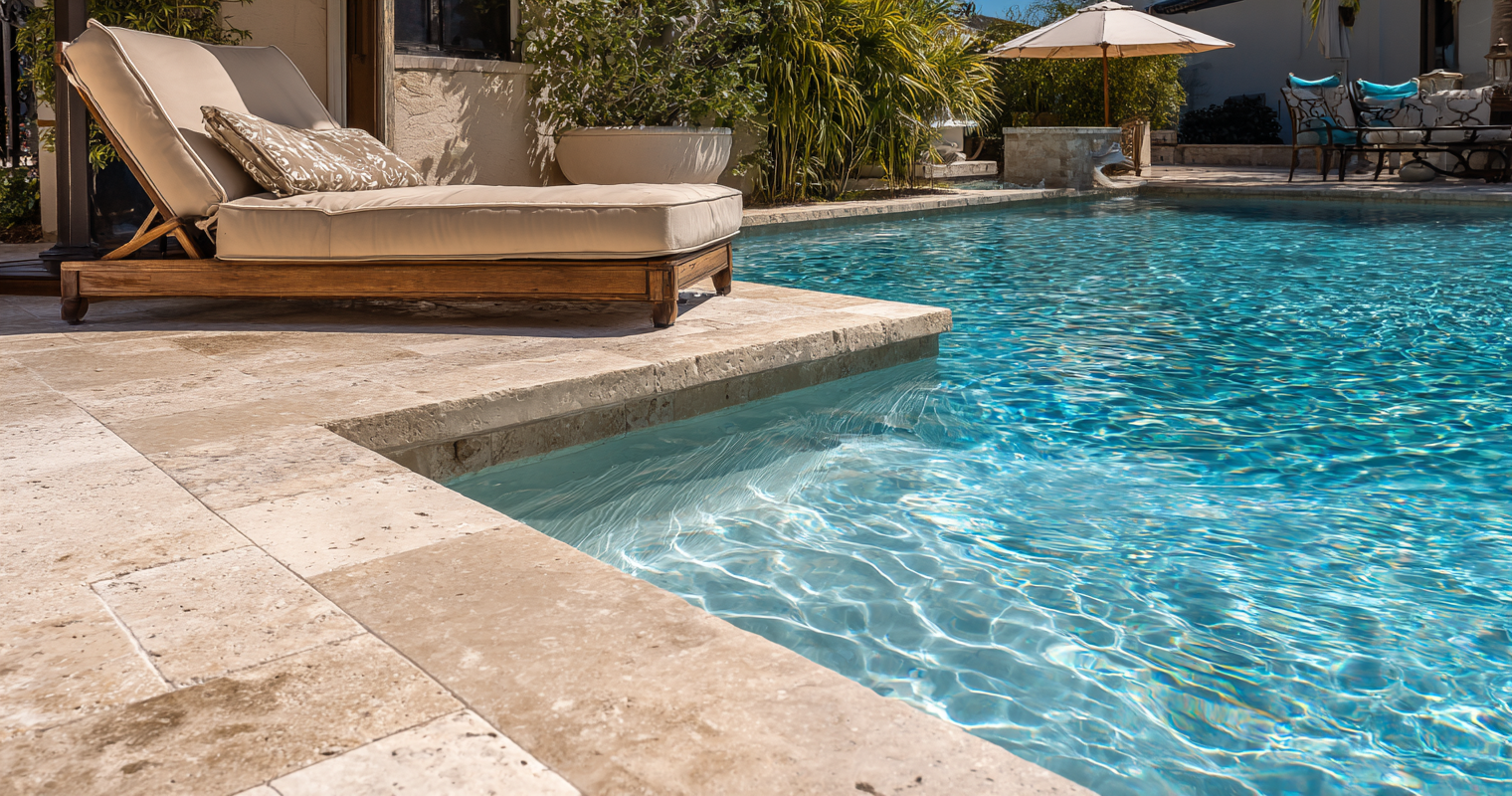
Weighing tanning ledge pros and cons is straightforward in Southwest Florida, because the climate does most of the arguing. A tanning ledge — also called a sun shelf or Baja shelf — is a shallow platform built into the pool, typically 6 to 12 inches deep, sized to hold loungers or chairs in a few inches of water.
In a place where the water is warm most of the year and the air is warmer still, a ledge is where people actually end up. It typically costs $3,000 to $8,000 when built with the pool, which makes it one of the best value-per-dollar decisions available.
Why Ledges Dominate Southwest Florida Builds
The primary argument is simple: you stay cool without swimming. Sitting in four to nine inches of water with a drink is the dominant way pools get used here, and a ledge is purpose-built for it. Standard pool steps are not — they are too narrow, too steep, and in the wrong place.
It is also the best supervised play area available for small children. Toddlers can sit and play in inches of water within arm's reach, which is far more practical than holding a child in four feet of water. This is a supervision aid, not a safety device — it does not replace barriers, alarms, or constant adult attention.
Ledges add visual weight to a pool too. A broad shallow shelf reads as generous and resort-like, and it gives the pool a defined shallow zone rather than a uniform rectangle of water.
Finally, it is one of very few features that is genuinely cheap relative to its impact. Compared with a grotto, an infinity edge, or an elaborate waterfall, a ledge costs little and gets used daily.
The Trade-Offs Nobody Mentions Upfront
Shallow water gets hot. This is the real drawback in Southwest Florida and it surprises people. Six inches of water in direct summer sun heats up considerably, and by afternoon a ledge can be noticeably warmer than the rest of the pool — occasionally warm enough to stop being refreshing. Positioning the ledge where it gets late-afternoon rather than midday sun helps significantly, as does shade over it.
It consumes pool area. On a small lot, a generous ledge can take a meaningful share of the surface, reducing swimmable water. On a compact Cape Coral yard this trade-off needs deliberate thought.
It can collect debris. Slow-moving shallow water is where leaves and dust settle. Proper circulation matters — ask specifically how the ledge is plumbed, because a ledge without dedicated returns tends to go stagnant and cloudy.
It is expensive to add later. Like all structural features, it is dramatically cheaper built with the pool than retrofitted, which means this is a decision to make now rather than defer.
Depth, Size, and What to Specify
Depth is the detail that most often goes wrong. Too shallow and a lounger sits in almost no water, defeating the point; too deep and chairs float and children cannot sit safely. The common range is 6 to 12 inches, and around 9 inches suits most in-pool furniture well. Ask your builder what depth their ledge chairs are designed for and match it.
Size it for the furniture you actually intend to use. Two loungers side by side need meaningfully more width than people estimate from a plan. Measure the chairs before the ledge dimensions are finalised.
Specify umbrella sleeves at the design stage if you want shade over the ledge. A sleeve set into the shelf during construction costs almost nothing; adding shade afterwards means freestanding bases that clutter the deck.
Ask about dedicated circulation for the shelf and, if you want them, bubblers. Bubblers are popular, look good, and add movement — but they are plumbed during construction and cannot be added sensibly afterwards.
When to Skip It
Skip the ledge if your pool is genuinely small and every square foot of swimmable water matters, if the only viable position gets full midday sun with no shade option, or if the pool is primarily for lap swimming and exercise. Those cases are the minority in this market, but they are real.
Related Pool Topics
Frequently Asked Questions
How much does a tanning ledge cost?
Typically $3,000 to $8,000 when built at the same time as the pool, depending on size and finish. It is one of the best value features available relative to how much it gets used in this climate.
How deep should a tanning ledge be?
Commonly 6 to 12 inches, with around 9 inches suiting most in-pool furniture. Too shallow and loungers sit in almost no water; too deep and chairs float and small children cannot sit safely.
Does a tanning ledge get too hot in Florida?
It can. Shallow water in direct summer sun heats noticeably, and by afternoon a ledge can be warmer than the rest of the pool. Positioning it for late-afternoon rather than midday sun, and planning shade, both help considerably.
Is a tanning ledge safe for toddlers?
It is a useful supervised play area, letting small children sit in inches of water within arm's reach. It is a supervision aid rather than a safety device, and does not replace compliant barriers, gates, alarms, and constant adult supervision.
Can I add a tanning ledge to an existing pool?
Technically yes, but it is expensive and disruptive because it means cutting into and rebuilding part of the shell. It is dramatically cheaper built with the pool, so it is worth deciding at design stage.
What size should a tanning ledge be?
Size it around the furniture you plan to use. Two loungers side by side need more width than most people estimate from a drawing, so measure the actual chairs before finalising dimensions.
Do tanning ledges collect dirt?
They can if circulation is poor, since slow shallow water lets debris settle. Ask specifically how the shelf is plumbed — a ledge with dedicated returns stays clear, one without tends to go cloudy.
What are bubblers and are they worth it?
Bubblers are small fountains set into the ledge that push water upward. They add movement, sound, and visual interest, and children enjoy them. They must be plumbed during construction, so decide before the shell is built.