Pool Construction Timeline in Cape Coral, Week by Week
What happens each week of a Cape Coral gunite build, including the stretches where nothing appears to happen at all.
This pool construction timeline in Cape Coral covers what happens after permits are issued, which is where most week-by-week breakdowns should start. Permitting duration varies and is the least predictable part of any project — the sequence below begins once your permit is in hand.
Figure on 8 to 16 weeks for a gunite build. The weeks below assume reasonable weather and no significant obstruction, and they include the quiet stretches that catch homeowners out.
Excavation, Steel, and Rough-In
Week 1 — Layout and excavation. The pool outline is marked, utilities are located, and the hole is dug. Typically one to two days of actual digging. In Cape Coral this is where limestone shows up, and where dewatering may be needed if groundwater enters the excavation. Both are common locally and both can add time.
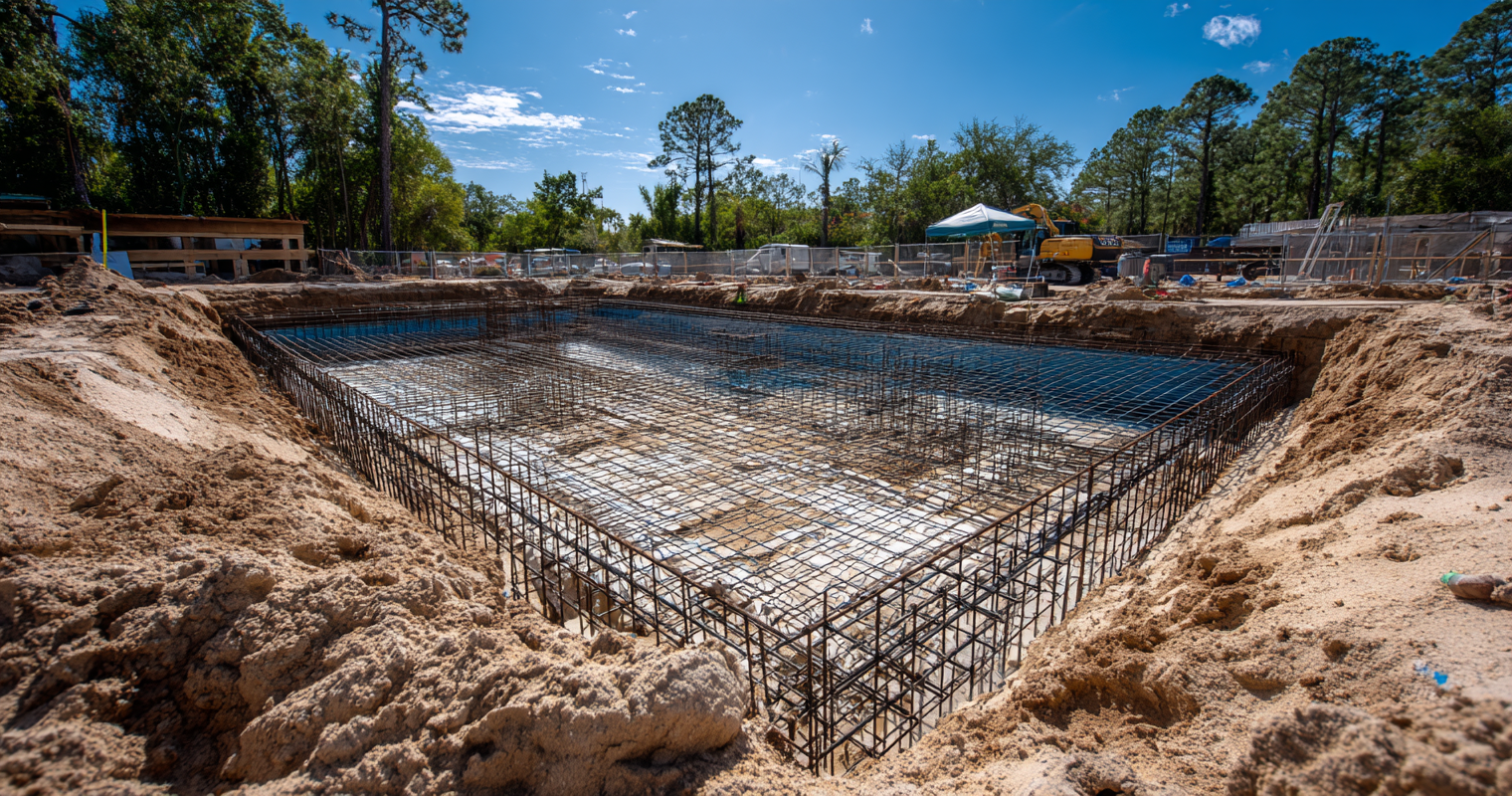
Week 2 — Steel and plumbing. A rebar cage is tied to the pool's shape and plumbing lines are run. This moves quickly and is visually satisfying — the pool suddenly has form.
Week 3 — Electrical rough-in and inspections. Bonding, light conduit, and equipment wiring go in, then inspections. Work cannot continue until these pass, and inspection scheduling is the first place small delays creep in. A day or two of apparent inactivity here is normal.
Gunite, Cure, and the Quiet Stretch
Week 4 — Gunite. The shell is sprayed over the steel in a single intensive day. It is loud and involves a lot of equipment, and by the end of it you have a recognisable pool.
Weeks 4 to 6 — Curing. This is the stretch that generates the most anxious phone calls. The shell must cure, and during that period there is little or no visible activity on site. You may be asked to water the shell daily to aid curing — follow those instructions if given. Nothing is wrong. Curing cannot be accelerated and rushing it compromises the structure.
Weeks 6 to 7 — Tile and coping. Waterline tile and coping are installed. Detailed, slower work than it looks, and the first stage where the pool starts to look finished rather than structural.
Deck, Enclosure, Finish, and Startup
Weeks 8 to 10 — Decking. Base preparation, then pavers, travertine, or poured concrete. Rain interrupts this stage readily, and in summer that is a frequent cause of slippage.
Weeks 10 to 12 — Screen enclosure. Usually a separate contractor with a separate schedule, which introduces a coordination dependency. Enclosure work commonly requires its own permit and inspection, so it is worth confirming early how that is sequenced.
Week 12 or so — Interior finish and fill. Plaster or aggregate is applied, and the pool is filled immediately afterwards without interruption. Equipment is commissioned and the system started.
Following weeks — Startup. The interior finish continues curing underwater while chemistry is brought into balance. Expect frequent brushing and careful chemical management during this period, guided by your builder's startup schedule. You can generally swim early on, but the startup protocol matters for the long-term life of the finish.
Where Cape Coral Builds Slip
Three things account for most local overruns: limestone extending excavation, summer storms stopping decking and finish work, and inspection scheduling between stages. None are within your builder's direct control, which is why the honest range is 8 to 16 weeks rather than a fixed number. Building through the drier autumn and winter months avoids the biggest of the three.
Related Pool Topics
Frequently Asked Questions
How long does a pool take to build in Cape Coral?
Typically 8 to 16 weeks for a gunite build after permits are issued. Fiberglass is considerably faster at around 3 to 6 weeks. Permitting duration is separate and varies.
Why is nothing happening at my pool site?
Most likely gunite curing or waiting on an inspection. Curing is a fixed period with little visible activity and cannot be rushed. Inspections must pass before the next stage begins. Both are normal parts of the sequence.
What is the longest stage of a pool build?
Gunite curing and the decking stage are usually the longest, with decking especially vulnerable to rain interruption. Waiting on inspection scheduling between stages also accumulates more than people expect.
Do I need to water the gunite shell?
Some builders ask homeowners to water the shell daily during curing to help the concrete cure properly. If you are given that instruction, follow it — it affects the long-term strength of the shell.
When does the screen enclosure get built?
Usually after decking, typically around weeks 10 to 12, and often by a separate contractor with their own schedule and permit. Confirm early how enclosure work is sequenced and permitted.
How soon can I swim after the pool is finished?
Usually within days of filling, but the interior finish continues curing underwater and startup chemistry runs over the following weeks. Follow your builder's startup schedule closely, since it affects the life of the finish.
Does limestone always slow down Cape Coral builds?
Not always, but it is common enough to plan for. Depth varies lot to lot, sometimes within a street. Breaking through requires heavier equipment and more time, so confirm how it is priced in your contract before signing.
Can I speed up my pool build in Cape Coral?
Not the construction sequence itself, but you can avoid adding to it. Finalise all selections before permitting, get your survey early, run HOA approval in parallel, and respond quickly to decisions and sign-offs.