
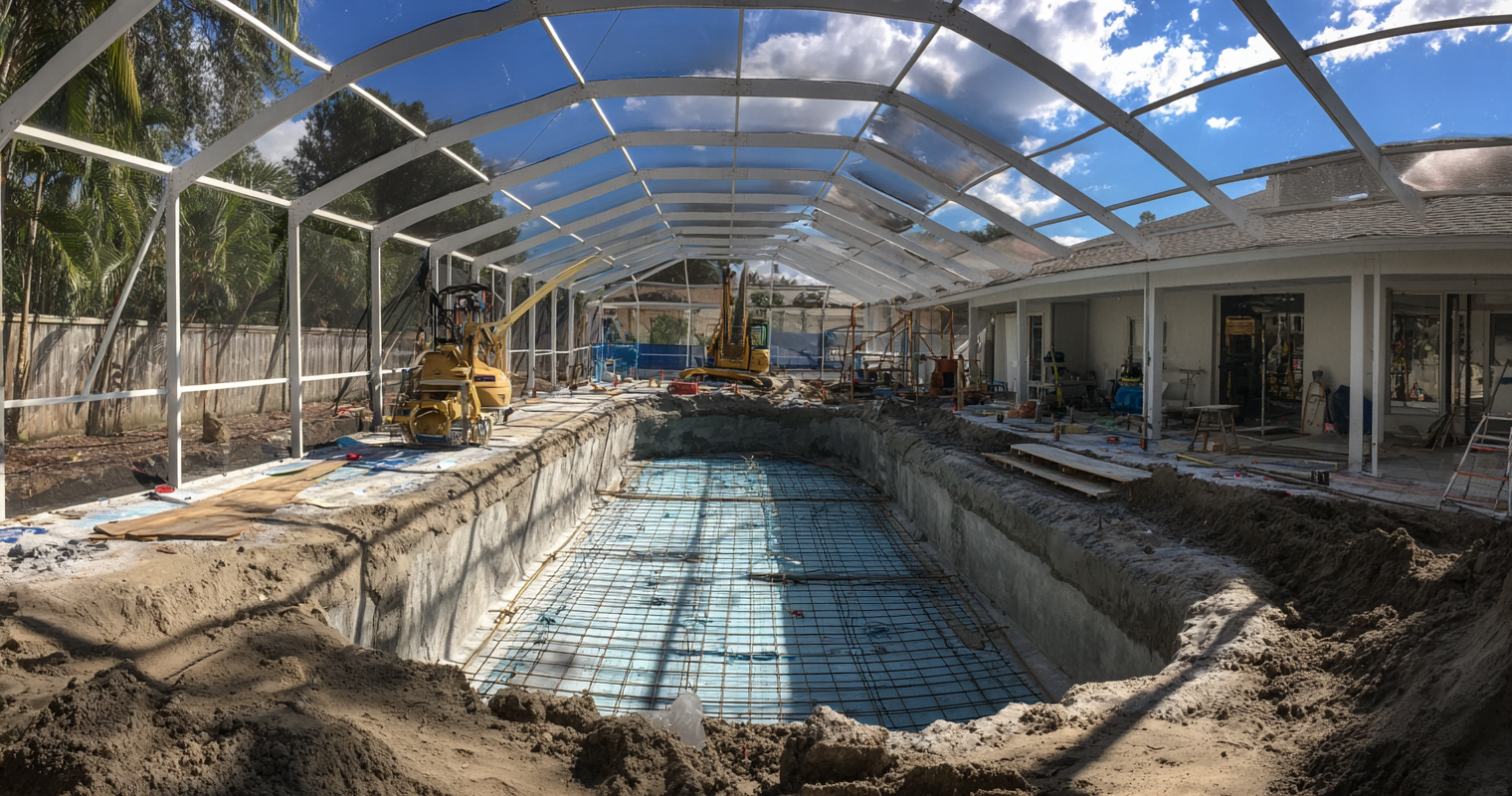
Pool Construction Delays in FL Causes and Fixes
Which delays are genuinely unavoidable, which are your builder's problem, and which are caused by the homeowner.
Pool construction delays in Florida are close to universal, and the useful question is not whether your project will slip but which kind of delay you are dealing with. Some are genuinely outside anyone's control. Some point to a builder problem. And a surprising share are caused by the homeowner without them realising.
Knowing which is which tells you whether to be patient or to push.
Permitting, Weather, and Ground Conditions
Permitting. Review times vary by jurisdiction and with department workload, and plans returned for corrections restart part of the process. Your builder can submit complete, accurate plans and respond quickly to comments, but cannot control review speed. This is the single largest source of unpredictability in a pool project.
Weather. Southwest Florida's summer storm season stops excavation, gunite application, decking, and interior finish work. These are not stages that can proceed in heavy rain. A wet summer routinely adds weeks to a build that would have run smoothly in the dry season. Nothing can be done about this except starting at a better time of year.
Ground conditions. Limestone and a high water table are common locally and vary lot to lot. Both extend excavation and add cost. An experienced local builder should raise the possibility upfront rather than treating it as an unforeseeable event — but encountering it genuinely does slow things down.
Inspection scheduling. Inspections must pass before work continues, and slots are not always immediately available. Individually these are small delays. Across an eight-stage build they accumulate.
Delays That Point to Something Wrong
Crews not showing up with no explanation. Quiet periods during curing or waiting on inspections are legitimate. Unexplained absence with no clear reason is not, and you are entitled to a straight answer about what is happening and when work resumes.
Taking on too many projects. A builder who has sold more work than they can staff will stretch every project. If your build repeatedly stalls while crews appear elsewhere, that is what is happening.
Cash flow problems. Requests for payment ahead of completed stages, combined with slow progress, are a serious signal. This is the pattern that precedes abandoned projects. Do not pay ahead of work to keep a project moving — it rarely helps and it removes your only leverage.
Poor subcontractor coordination. A pool build involves many trades in sequence. Managing that sequence is the builder's core job, and repeated gaps between trades indicate weak project management rather than bad luck.
Failed inspections. Occasional corrections are normal. Repeated failures on the same items suggest workmanship problems, and each one costs a rescheduling cycle.
Delays Homeowners Cause Without Realising
This category is larger than most people expect, and it is entirely fixable.
Changing your mind after permitting. Design changes after plans are submitted mean revisions, resubmission, and a fresh wait. A change that feels small to you can restart the permitting clock.
Slow selections. Tile, coping, decking, and interior finish all need choosing, and crews cannot proceed without them. Selections that sit unmade for weeks stall the project as effectively as any weather.
Late HOA approval. Many homeowners wait for the building department before starting the HOA process. Running the two in parallel routinely saves weeks.
Missing survey. The survey is needed early. Chasing it after design has begun holds up everything downstream.
Slow payment at milestones. Payment schedules are tied to stages for a reason, and delayed payment legitimately pauses work.
What to Do About It
Before signing, ask how delays are handled in the contract and which causes are treated as excusable. During the build, keep communication in writing so there is a record, and ask for a revised schedule whenever something slips rather than letting the end date drift silently. If a project stalls badly with no explanation and payment requests continue, that is the point to get advice rather than wait it out.
Related Pool Topics
Frequently Asked Questions
Why is my Florida pool build taking so long?
Most commonly permitting, weather, ground conditions such as limestone or groundwater, and inspection scheduling. Homeowner-side causes such as late selections or post-permit design changes are more common than people expect.
Are pool construction delays normal in Florida?
Yes. Some slippage is close to universal, which is why honest timelines are given as ranges rather than fixed dates. The useful question is what kind of delay you are experiencing.
How much do storms delay pool construction?
Summer storm season can add weeks. Excavation, gunite, decking, and interior finish cannot proceed in heavy rain, so a wet season stretches builds that would move quickly in drier months.
What delays can I actually prevent?
Finalise every selection before permitting, get your survey early, run HOA approval in parallel with building department review, respond quickly to decisions, and pay milestones on time. These are the delays fully within your control.
When is a delay my builder's fault?
Unexplained absences, repeated stalls while crews work elsewhere, poor subcontractor coordination, repeated failed inspections on the same items, and requests for payment ahead of completed work all point to a builder problem rather than circumstance.
Should I pay ahead to keep the project moving?
No. Paying ahead of completed stages rarely speeds anything up and removes your main leverage. Requests to jump ahead on the payment schedule are a common early sign of cash flow trouble.
Does changing my design cause delays?
Significantly, if made after plans are submitted for permitting. Changes mean revisions and resubmission, which can restart part of the review process. Settle all design decisions before permitting.
What should the contract say about delays?
How delays are handled, which causes are excusable such as weather and permitting, and what happens if the schedule slips substantially. Establish this before signing, and ask for a revised schedule in writing whenever something changes.