
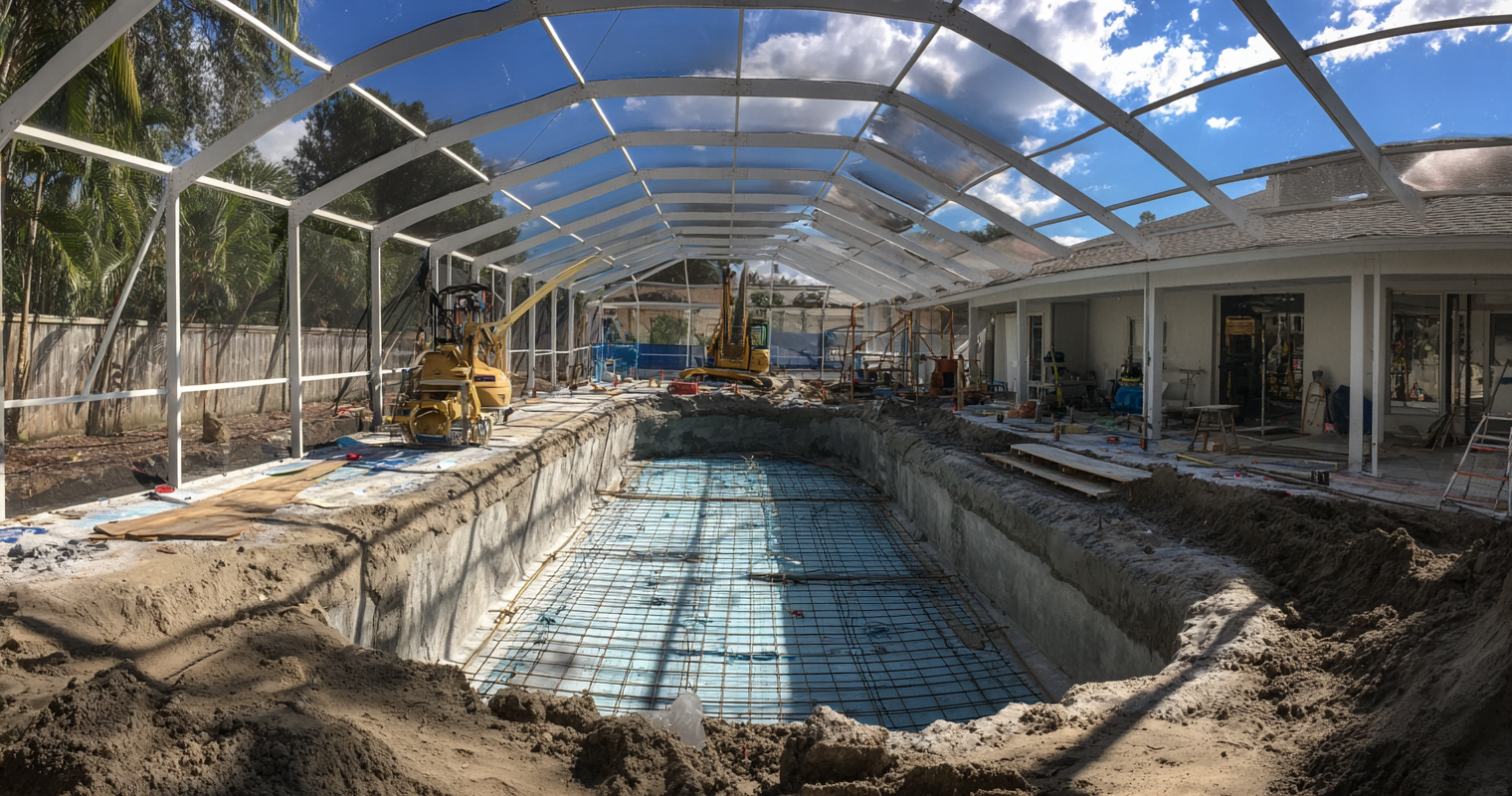
Best Time of Year to Start Building a Pool in Florida
Start in autumn, build through the dry season, and swim by spring — the timing that avoids most weather delays.
The best time of year to build a pool in Florida is autumn through early winter, and the reasoning is straightforward: it puts the weather-sensitive stages of construction into the dry season, and it means you are finished before the summer you actually want to use the pool.
The instinct is to start in spring so the pool is ready for summer. That instinct is what produces builds running through storm season and finishing in autumn, just as the season ends.
Why Storm Season Stalls Construction
Southwest Florida's wet season runs roughly from late spring into autumn, bringing near-daily afternoon storms and much higher rainfall. Several pool construction stages simply cannot proceed in those conditions.
Excavation becomes difficult when the hole fills with water and the site turns to mud. Gunite application needs suitable conditions. Decking — base preparation, paver setting, or concrete pouring — is readily disrupted by rain. Interior finish work is weather-sensitive too.
None of these stages can be pushed through. They wait. And because a pool build is sequential, one weather-delayed stage pushes everything after it, so the delays compound rather than absorb.
Hurricane season overlaps the same months, which introduces both the possibility of significant interruption and, after any major storm, heavy demand on contractors and materials across the region.
When to Start for the Finish You Want
Work backwards. A gunite build is typically 8 to 16 weeks of construction. Add design and contract time of two to six weeks, and permitting on top of that, which varies by jurisdiction and is the least predictable element.
That means beginning conversations in early autumn generally gets a gunite pool finished sometime in late winter or spring, with construction running through the driest months.
Starting in spring, by contrast, typically pushes construction squarely into the wet season, with completion in autumn — after the period you most wanted it. This is the single most common timing mistake homeowners make.
If you are set on a summer finish, start the previous autumn rather than the same spring. The extra lead time is what buys you a dry-season build.
For fiberglass the calculation is gentler, since construction is only around three to six weeks, but excavation and decking are still weather-sensitive and the same logic applies in compressed form.
Demand, Scheduling, and Practicalities
Contractor demand shifts seasonally, and the busiest enquiry period tends to follow the spring rush of homeowners deciding they want a pool for summer. Starting outside that peak can mean more attentive scheduling and a builder with genuine capacity for your project.
Permitting workload also varies, and departments experience busier and quieter periods. It is worth asking your builder what they are currently seeing in your jurisdiction rather than relying on general expectations.
There is a practical argument for winter construction too: the disruption itself is more tolerable. Heavy equipment, noise, and an unusable garden are easier to live with when you were not going to be outside much anyway.
And if you are landscaping around the pool afterwards, autumn and winter planting generally establishes better in Southwest Florida than planting into peak summer heat.
The Short Answer
Start conversations in early autumn. Have permits in hand by late autumn. Build through the dry months. Swim from spring onward with the pool fully finished and startup complete before the season you actually want it. If that window has passed, starting is still better than waiting — just plan for weather interruption and set expectations accordingly.
Related Pool Topics
Frequently Asked Questions
What is the best month to start building a pool in Florida?
Early autumn is generally the best time to begin the process. It allows design and permitting to complete so construction runs through the drier winter months, with the pool finished before the following summer.
Should I start in spring so it is ready for summer?
That is the most common timing mistake. Starting in spring usually pushes construction into storm season and completion into autumn, just as the season ends. Start the previous autumn for a summer finish.
Does rainy season really delay pool construction?
Yes, substantially. Excavation, gunite, decking, and interior finish work all stall in heavy rain, and because the build is sequential those delays compound rather than absorb.
How far ahead should I plan a pool build?
Allow two to six weeks for design and contract, permitting time that varies by jurisdiction, and 8 to 16 weeks of construction for gunite. Working backwards from your target finish date is the practical approach.
Is it cheaper to build a pool in the off season?
Pricing varies by builder rather than following a fixed seasonal pattern, but starting outside the spring enquiry rush can mean better scheduling attention and a builder with genuine capacity. Ask what they are currently seeing.
Does hurricane season affect pool construction?
It can. Beyond direct interruption, the period after any major storm brings heavy regional demand on contractors and materials, which affects scheduling and availability well beyond the storm itself.
Is fiberglass less affected by the season?
Somewhat, because construction is only around three to six weeks. But excavation and decking remain weather-sensitive, so the same reasoning applies in a more compressed form.
What if I have already missed the autumn window?
Starting is still generally better than waiting a full year. Plan for weather interruption, set expectations for a longer build, and discuss with your builder how they sequence weather-sensitive stages during the wet season.