
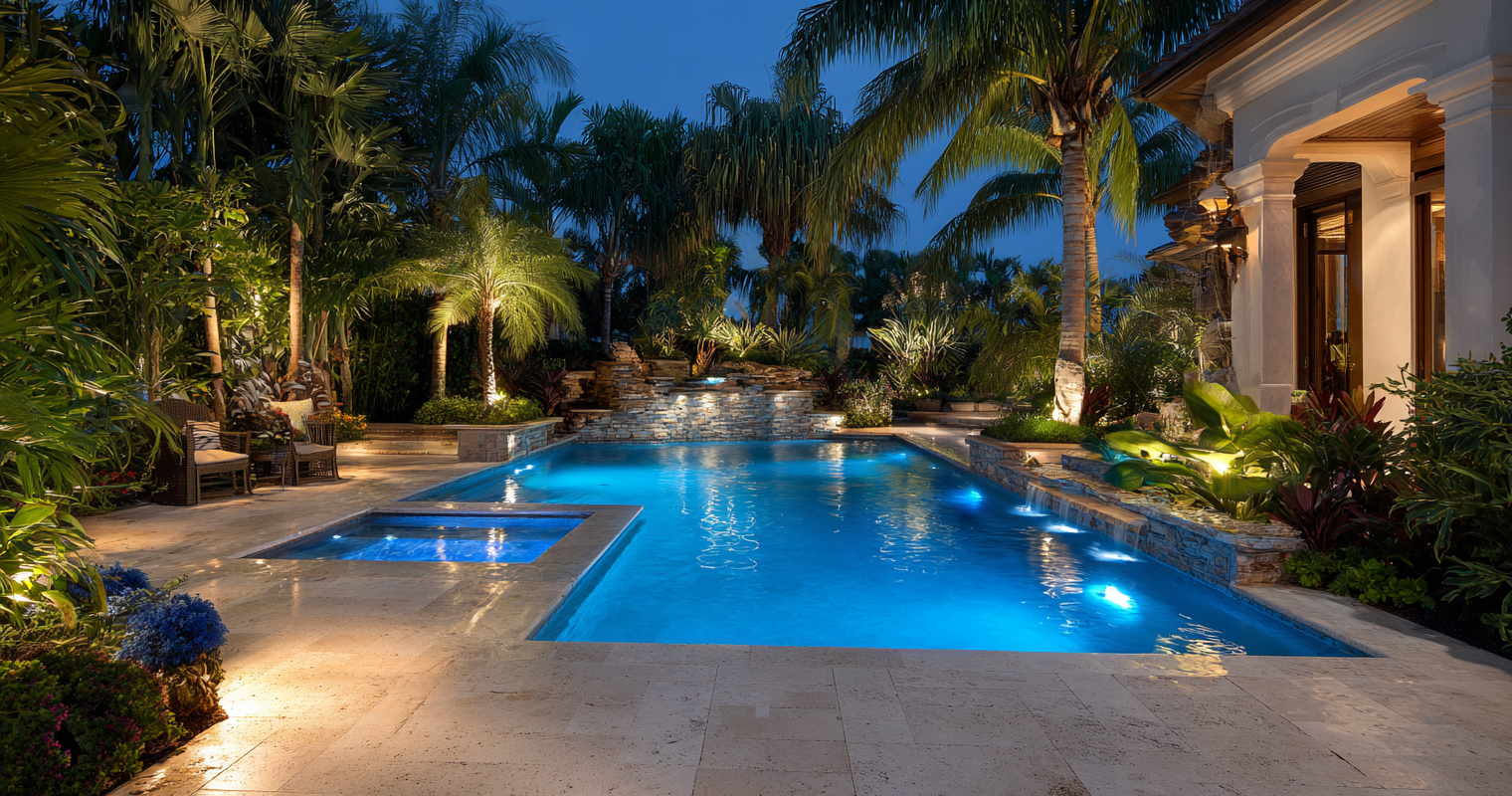
Best Pool Landscaping Plants for SW Florida Climate
The wrong planting turns into a daily skimming chore. Here is what gives you the tropical look without the litter.
Choosing the best pool landscaping plants for Southwest Florida is mostly an exercise in avoiding maintenance you did not sign up for. Every plant near a pool is judged on one question before anything else: how much of it ends up in the water?
The tropical look people want here is entirely achievable. It just needs species selected for low litter, salt tolerance, and root behaviour rather than picked from a nursery on appearance alone.
Three Filters Before Anything Else
Litter. This is the big one. Plants that continuously shed leaves, flowers, seed pods, or fruit turn your pool into a daily job and clog skimmers and filters. Flowering and fruiting trees are the usual offenders, and they are exactly what people are drawn to.
Roots. Aggressive root systems damage pool shells, plumbing, and deck slabs over years. Keep large trees well back, and be particularly cautious with species known for vigorous surface roots. The damage is slow, expensive, and entirely avoidable with sensible placement.
Salt tolerance. Splash-out from a saltwater pool, plus coastal salt air, kills plants that cannot handle it. Near the Gulf or with a salt system, this filter is not optional.
A fourth, practical consideration: avoid anything with thorns, spines, or sharp edges next to a deck where people walk barefoot. Some otherwise excellent Florida plants are unpleasant to brush against.
Reliable Choices for Poolside Planting
Ornamental grasses such as muhly grass and fakahatchee grass are among the best poolside plants available here. They are salt-tolerant, drop very little, move attractively in wind, and need minimal care. Muhly grass in particular gives a spectacular pink haze in autumn.
Bromeliads are close to purpose-built for this. Low litter, tolerant of heat, striking colour and structure, and happy in the filtered light near a screen enclosure. They are one of the easiest ways to get colour without mess.
Agave, yucca, and similar architectural plants handle salt and drought well and drop essentially nothing. Mind the spines — site them away from walkways and seating.
Smaller palms such as areca, pygmy date, and European fan give the tropical signal people want. Palms do shed fronds, but on a predictable occasional basis rather than continuously, which is far more manageable than a constantly dropping flowering tree. Keep them far enough back that fronds do not fall directly into the water.
Foliage colour from crotons and cordyline delivers strong tropical colour with modest litter, and both handle Southwest Florida heat comfortably.
Groundcover such as dwarf jasmine or perennial peanut keeps beds tidy and reduces the sand and soil tracked onto the deck and into the pool.
Plants That Cause Real Problems
Heavy flowering trees and shrubs immediately adjacent to the water are the most common regret. Bougainvillea is a good example — spectacular, thoroughly suited to the climate, and a constant source of bracts in the pool plus thorns near bare feet. It is a superb plant sited away from the water and a nuisance beside it.
Fruiting trees drop fruit that stains decking and fouls the water. Keep them out of the pool area entirely rather than trying to manage them.
Large shade trees with vigorous roots need generous distance from the shell, plumbing, and deck. The shade is genuinely valuable in this climate, so the answer is placement rather than exclusion.
Anything that attracts heavy bee or wasp activity is worth reconsidering directly beside seating, however attractive it is elsewhere in the garden.
Practical Placement
Think in bands. Keep the zone immediately around the deck to low, tidy, non-shedding planting. Put structure, height, and anything that sheds in an outer band further back. And plan irrigation deliberately — overspray onto the deck causes staining and slip issues, and overspray into a pool alters water chemistry.
Related Pool Topics
Frequently Asked Questions
What are the best plants to put around a pool in Southwest Florida?
Ornamental grasses such as muhly and fakahatchee, bromeliads, agave and yucca, smaller palms like areca and pygmy date, and foliage plants such as crotons and cordyline. All give a tropical look with relatively little litter.
What plants should I avoid near a pool?
Heavy flowering species such as bougainvillea, fruiting trees, and large trees with aggressive roots close to the shell or plumbing. Also avoid thorny or spiny plants beside walkways and seating where people go barefoot.
Are palm trees good around pools?
Smaller palms work well and give the tropical look people want. They shed fronds occasionally rather than continuously, which is manageable. Site them far enough back that fronds do not drop straight into the water.
What plants tolerate saltwater pool splash?
Ornamental grasses, agave, yucca, and many bromeliads handle salt exposure well. If you have a salt system or are near the Gulf, treat salt tolerance as a requirement rather than a preference.
How far should trees be from a pool?
Far enough that roots cannot reach the shell, plumbing, or deck, and that leaf drop does not land in the water. The distance depends on the species and its mature root spread, so ask a local landscaper about the specific tree.
Will landscaping damage my pool?
Aggressive root systems can damage shells, plumbing, and deck slabs over years. Sensible species selection and generous setbacks from the structure prevent it. The damage is slow and expensive, and entirely avoidable.
How do I get a tropical look without the mess?
Use foliage rather than flowers for colour. Crotons, cordyline, and bromeliads give strong tropical impact with far less litter than flowering shrubs, and they handle the heat comfortably.
Does irrigation affect the pool?
It can. Overspray onto decking causes staining and slip issues, and overspray into the pool alters water chemistry. Plan irrigation zones and head positions so they do not throw water onto the deck or into the pool.