Asking
how long it takes to build a pool in Southwest Florida gets you two very different answers depending on whether you mean construction or the whole project. Construction itself typically runs 8 to 16 weeks for gunite and 3 to 6 weeks for fiberglass. The full project — design, permitting, construction, and startup — commonly runs 4 to 8 months from first conversation to first swim.
The gap between those two numbers is where nearly all the frustration in pool projects lives. Permitting is outside your builder's control and outside yours, and it is the stage most likely to add weeks nobody planned for.
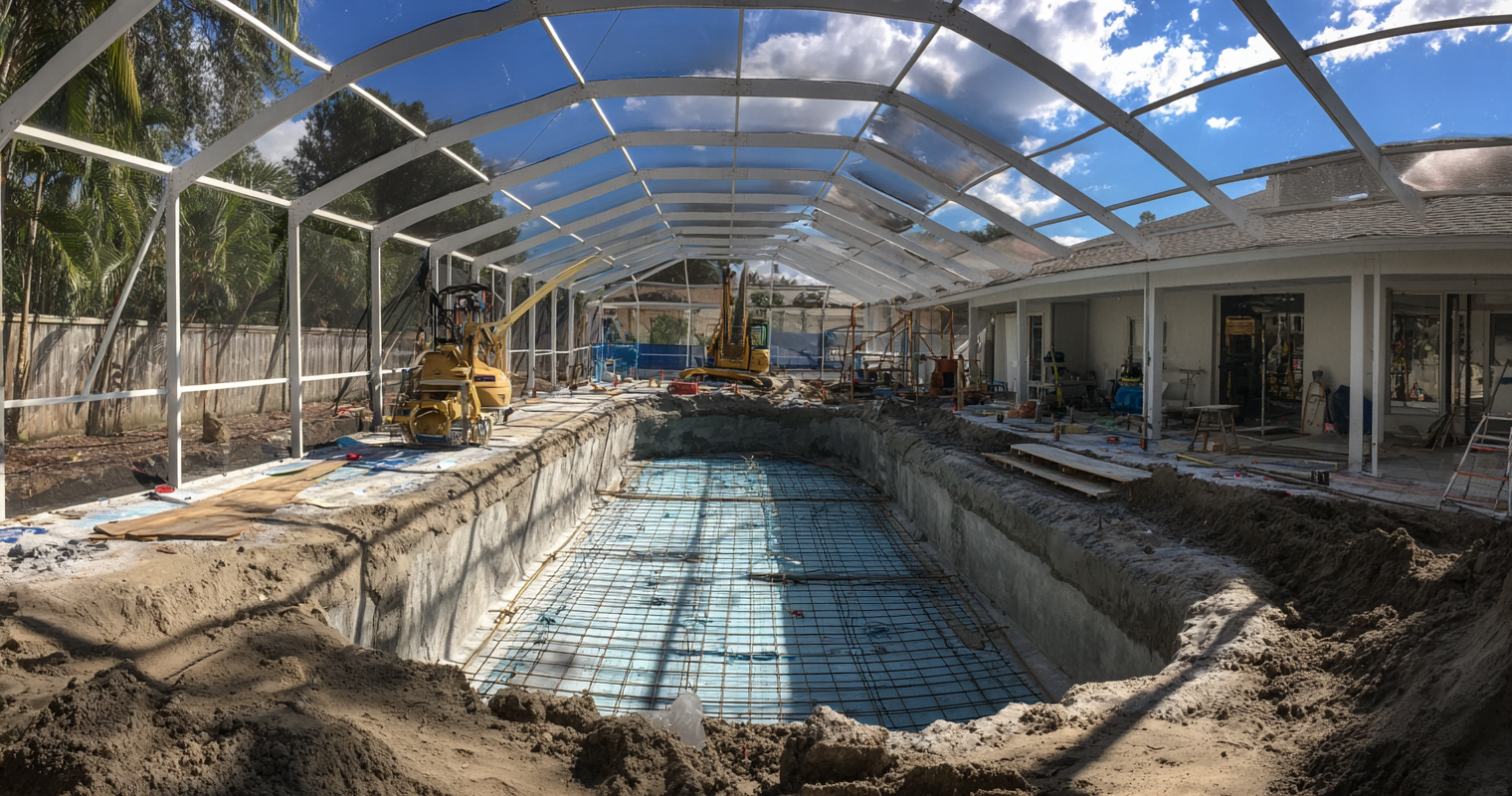
The Realistic Timeline
Every stage below assumes things go normally. They frequently do not, and the section further down on delays is worth reading before you commit to a date.
2–6 weeksDesign and contract
VariesPermitting, by jurisdiction
8–16 weeksGunite construction
3–6 weeksFiberglass construction
What Actually Happens, In Order
1
Design and Contract
Site assessment, survey review, layout, and a detailed contract. Two to six weeks depending on how quickly decisions get made. This is the stage where being decisive genuinely shortens the project — every change after permitting costs time and money.
2
Permitting
Plans go to your city or county building department for review. Duration varies significantly by jurisdiction, by current workload, and by whether plans come back with corrections. HOA approval, where applicable, runs alongside and has its own timeline. This is the least predictable stage of the entire project.
3
Excavation and Steel
The hole is dug, then a steel rebar cage is tied. Usually a matter of days unless excavation hits limestone or groundwater, both common in parts of Cape Coral. This is where surprise change orders most often appear.
4
Plumbing, Electrical, and Inspections
Plumbing and electrical rough-in, followed by inspections that must pass before work continues. Inspection scheduling is a common source of small delays that accumulate.
5
Gunite and Cure
On a gunite build, the shell is sprayed and then must cure. Curing is not optional and cannot be rushed — this is a fixed period where nothing visible happens and homeowners often assume the project has stalled.
6
Tile, Coping, and Decking
Waterline tile and coping go in, then the deck is laid. Screen enclosure work typically follows, often by a separate contractor, which introduces its own scheduling dependency.
7
Interior Finish, Fill, and Startup
Plaster or aggregate is applied, then the pool is filled immediately and startup begins. Startup is a supervised chemical process over the following weeks — brushing, balancing, and gradual equipment commissioning. The pool is usable early but the finish is still curing.
Why Southwest Florida Projects Run Long
Four causes account for most delays here.
Permitting and inspection scheduling. The single biggest variable, and largely outside anyone's control. Plans that come back with corrections restart part of the clock.
Weather. Summer storm season stops excavation, gunite application, decking, and interior finish work. A wet summer can add weeks to a build that would move quickly in the dry season.
Ground conditions. Limestone requires breaking through, and a high water table complicates excavation. Both are common locally and both add time and cost mid-project.
Subcontractor sequencing. A pool build involves excavation, steel, plumbing, electrical, gunite, tile, decking, screen enclosure, and finish crews. Each has its own schedule. One crew running late pushes everyone behind it.
What You Can Actually Control
Not much of the timeline is in your hands, but the parts that are matter more than people realise.
Decide everything before permitting. Finish, tile, coping, decking, features, lighting. Changes after plans are submitted mean revisions, resubmission, and delay.
Get your survey early. It is required, and chasing it late holds up the whole sequence.
Handle HOA approval in parallel rather than sequentially. Many homeowners wait for building department approval before starting the HOA process and lose weeks unnecessarily.
Respond quickly. Selections, sign-offs, and payment milestones all sit with you, and slow responses at your end are a genuinely common cause of delay.
Start in autumn or early winter if you can. Building through the drier months avoids the storm season interruptions that stretch summer builds.
The Build Process, Step by Step
The best time to start a Florida pool build: why autumn beats spring, how storm season stalls work, and when to begin for a summer finish.
A checklist for choosing a Southwest Florida pool builder: license verification, insurance, contract detail, references, and payment terms.
Preparing your yard for pool construction: access routes, irrigation, plants to save, pets, and what to agree with your builder first.
Why Florida pool builds run late: permitting, weather, ground conditions, and subcontractors, plus which delays you can actually prevent.
A week-by-week Cape Coral pool construction timeline: excavation, steel, gunite, cure, deck, and finish, with realistic waiting periods.
How pool inspections work during a Lee County build: what gets checked at each stage, why they gate progress, and how to avoid failures.
Warning signs when hiring a Florida pool contractor: licence problems, large deposits, vague contracts, and pressure tactics to walk away from.
What happens after your Florida pool is built: filling, startup chemistry, brushing, equipment commissioning, and warranty documentation.
The questions to ask a Southwest Florida pool builder before signing: licensing, contract detail, timeline, ground conditions, and warranty.
Pool excavation in Florida: access needs, limestone and water table surprises, spoil removal, and how to avoid mid-dig change orders.
Frequently Asked Questions
How long does it take to build a pool in Southwest Florida?
Construction typically takes 8 to 16 weeks for gunite and 3 to 6 weeks for fiberglass after permits are issued. The complete project including design, permitting, and startup commonly runs 4 to 8 months.
Why does permitting take so long?
Review times vary by jurisdiction and by current department workload, and plans returned with corrections restart part of the process. It is the least predictable stage of a pool project and largely outside both your and your builder's control. Check current expectations with your local building department.
What is the longest part of building a pool?
Either permitting or, on a gunite build, the sequence of cure-and-wait stages during construction. Curing cannot be rushed, and it is the period where homeowners most often assume work has stalled.
Is fiberglass really that much faster?
Yes. The shell is manufactured off site and set in a prepared hole, so construction is commonly 3 to 6 weeks against 8 to 16 for gunite. Permitting takes the same time either way, so the total project gap is smaller than the construction gap.
What is the best time of year to build a pool in Florida?
Starting in autumn or early winter generally means construction runs through the drier months, avoiding the storm interruptions that stretch summer builds. Demand and scheduling also shift seasonally, so it is worth discussing with your builder.
What causes pool construction delays in Florida?
Permitting and inspection scheduling, summer weather, ground conditions such as limestone and a high water table, and subcontractor sequencing. Homeowner decisions and slow sign-offs are a more common cause than most people expect.
Can I speed up my pool build?
Not the construction itself, but you can avoid adding to it. Finalise every selection before permitting, get your survey early, run HOA approval in parallel with building department review, and respond promptly to decisions and sign-offs.
How long after the pool is finished can I swim?
The pool is filled immediately after the interior finish is applied and is usually usable within days, but startup is a supervised chemical process running over the following weeks while the finish cures. Follow your builder's startup instructions closely during that period.
Do I need to be home during construction?
Not generally, but crews need site access and there are points where decisions and sign-offs are needed. Being reachable matters more than being present. Inspections require access to the work area.
What happens if my builder misses the timeline?
This is what the contract is for. Look for how delays are addressed before you sign, understand which causes are excusable such as weather and permitting, and keep written records of schedule commitments and changes throughout the project.
Related Pool Topics